
Coffee, a Fundraising Poster, and Bread Broken by Hand
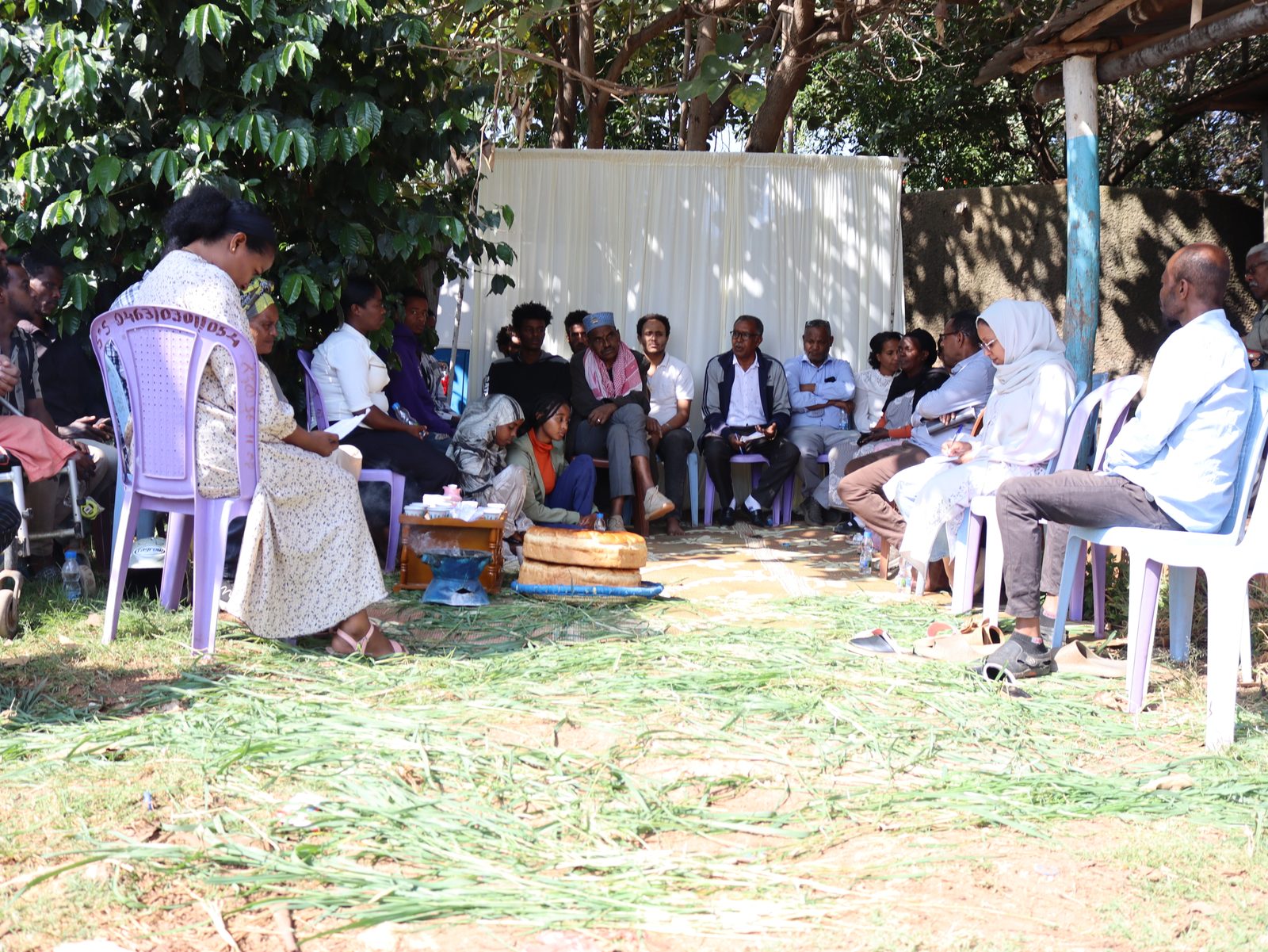
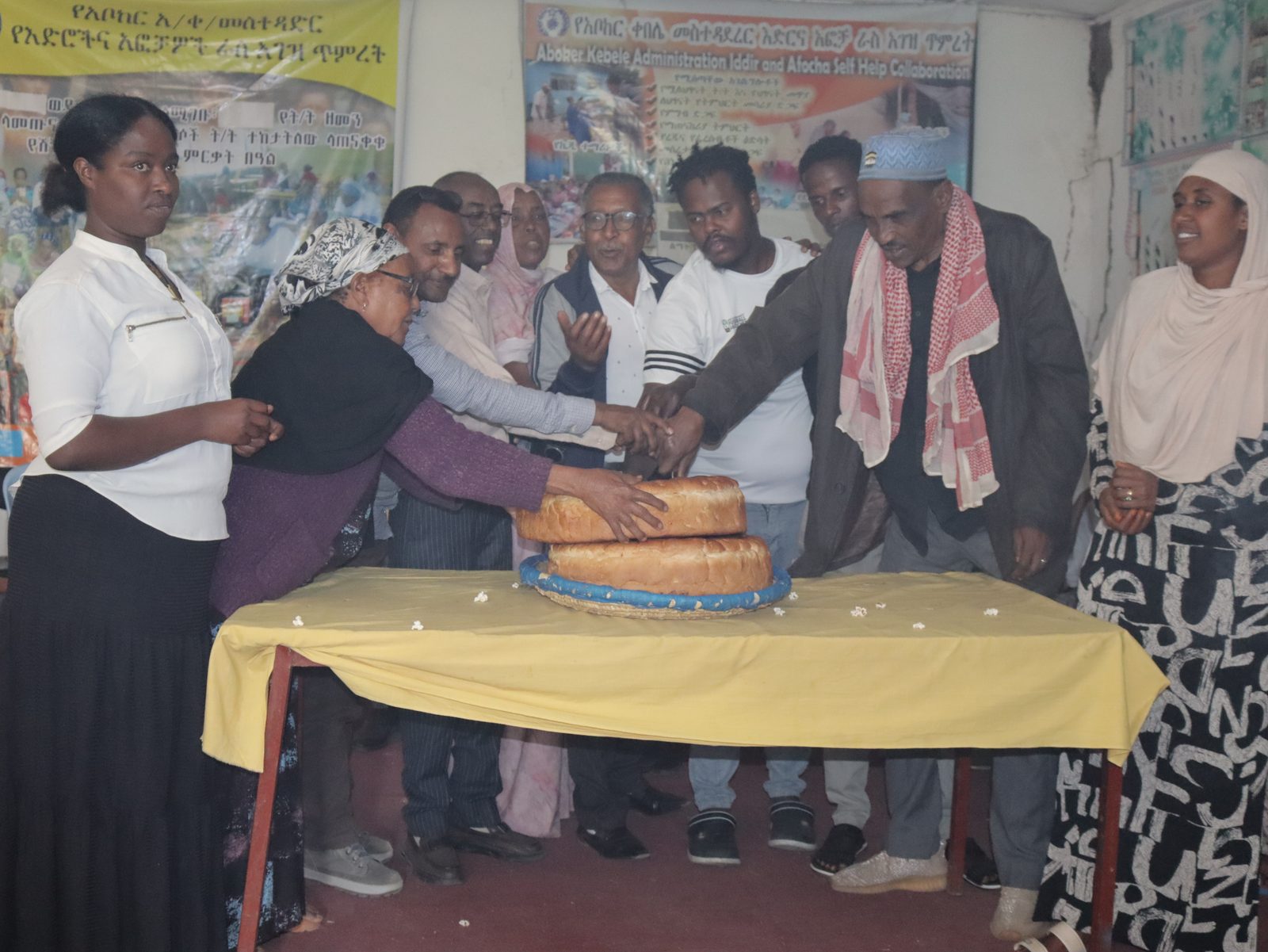
This session, part of the Community-Led Conflict Transformation Through Participatory Action Research (PAR) program, took place in Aboker Woreda, Harar, supported by SIDA, the Life & Peace Institute, and EDI. Later in the session, the same neighborhood is independently named again as the Aboker Kebele Administration Iddir and Afocha Self Help Collaboration.
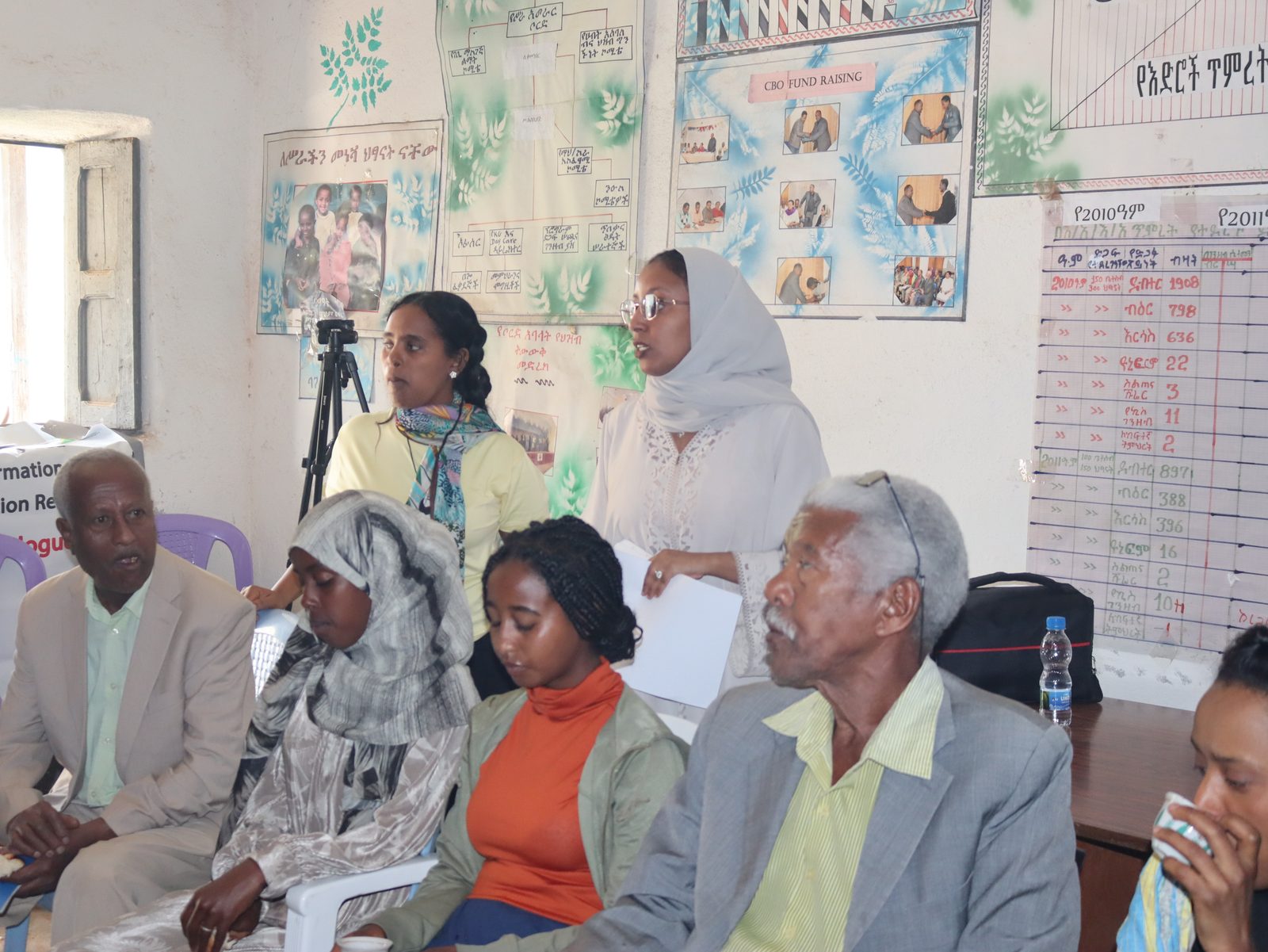
The session runs in two rooms: an outdoor circle under a tree with a coffee ceremony at its center, then an indoor kebele office lined with posters, including one headed "CBO Fund Raising," before closing with a bread-breaking ritual, hands joining over two stacked loaves.
The Same Program, a Different Room
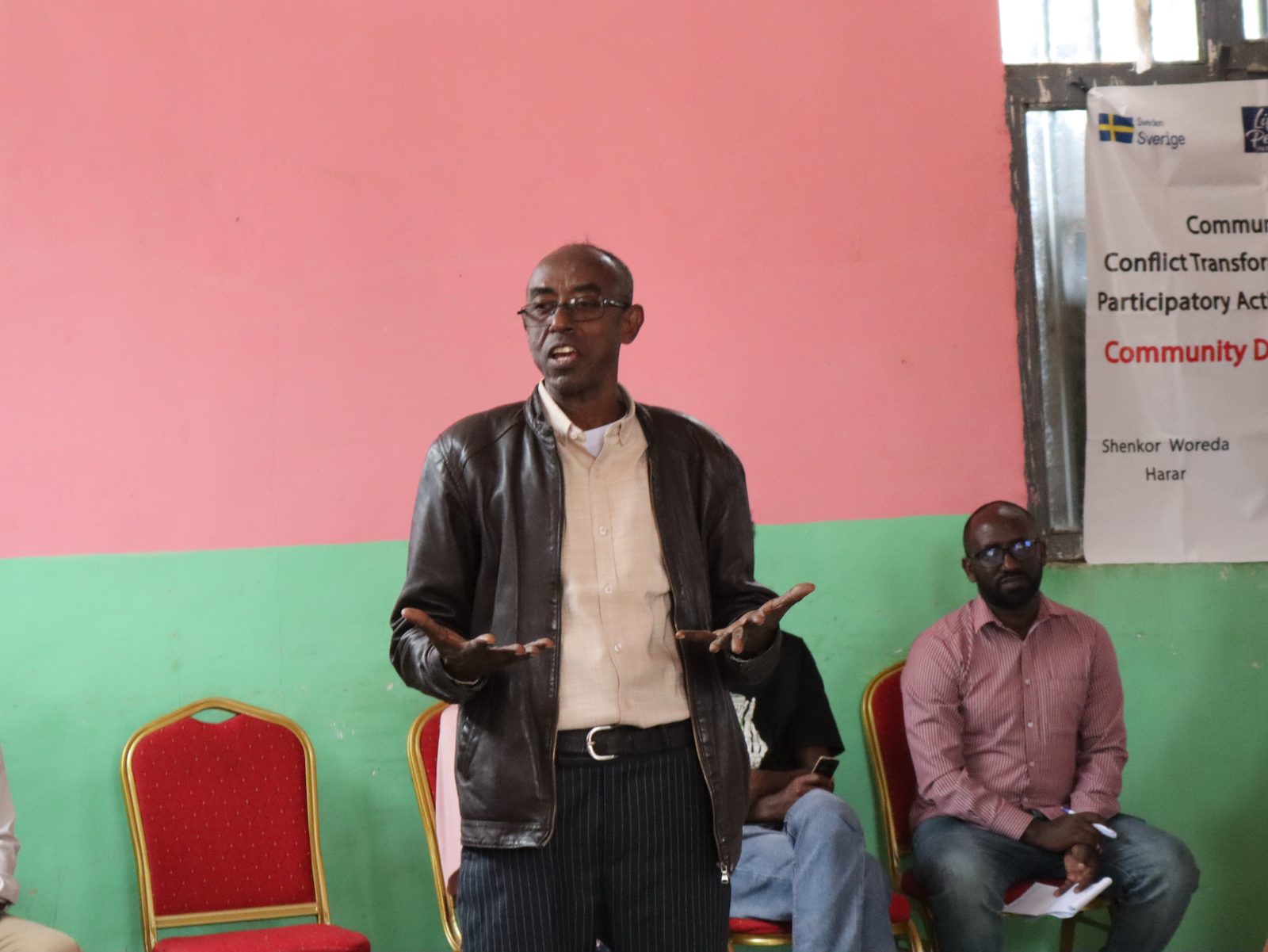
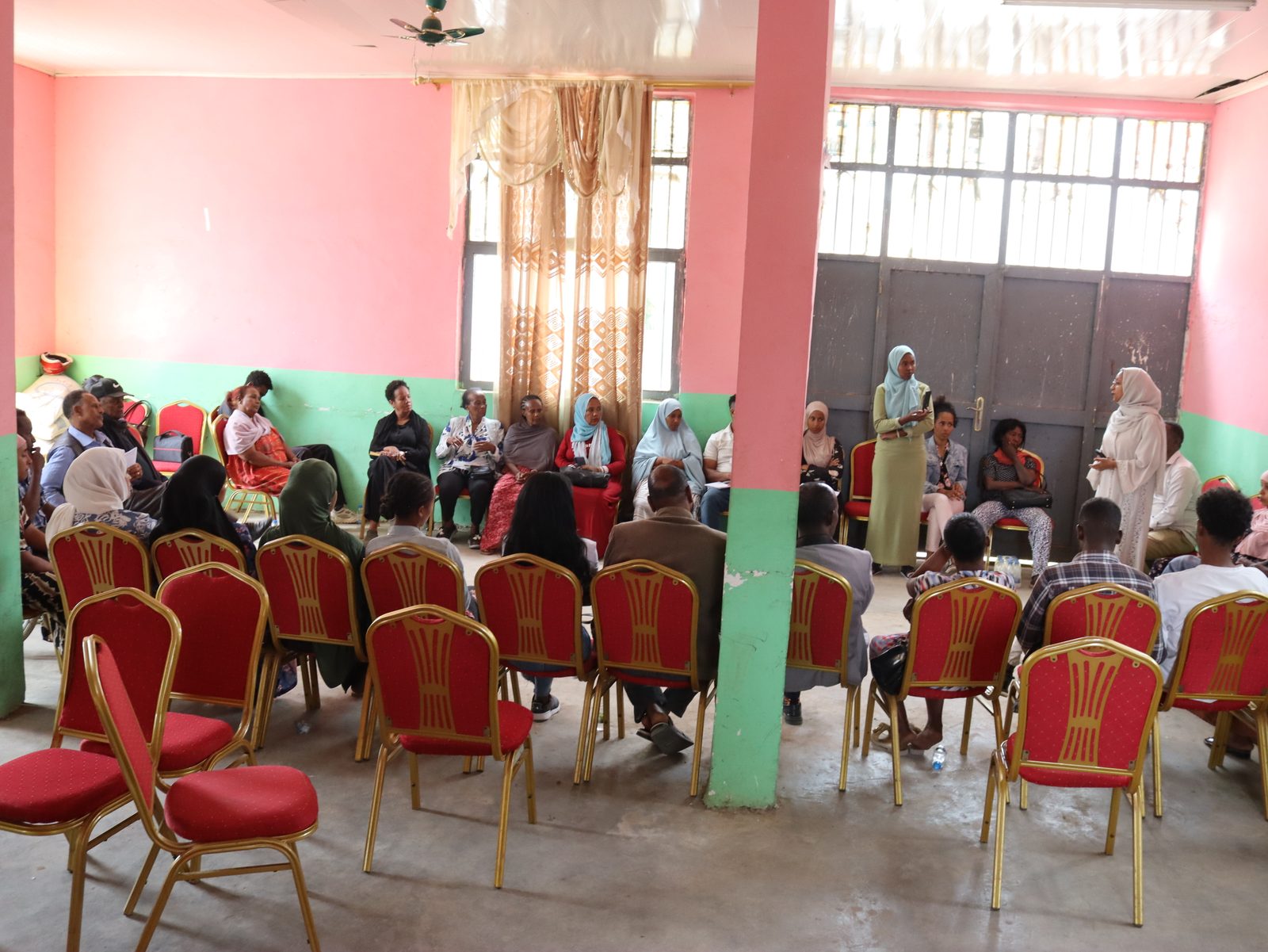
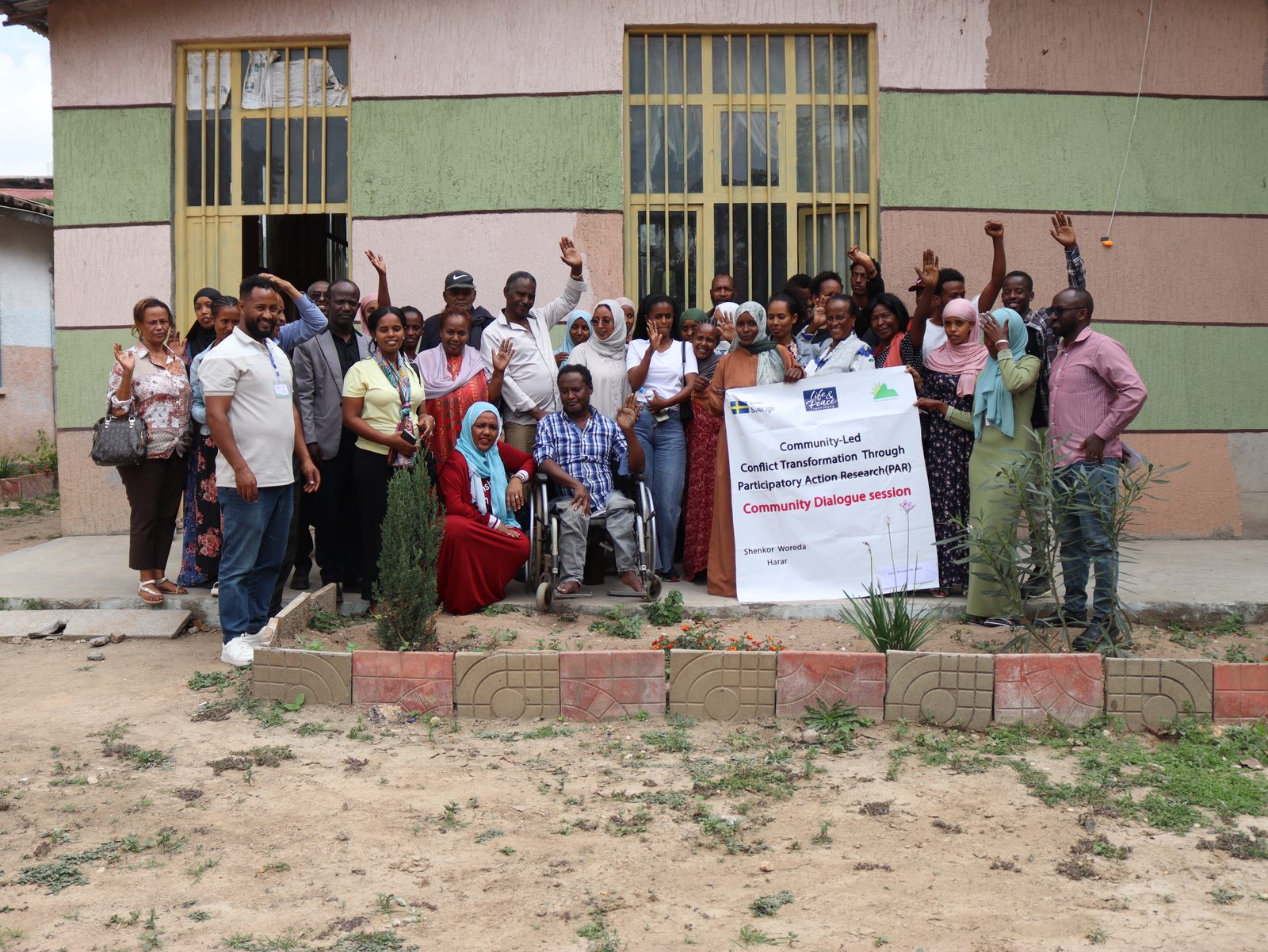
This session, the same Community-Led Conflict Transformation Through Participatory Action Research (PAR) program, took place in Shenkor Woreda, Harar, again supported by SIDA and the Life & Peace Institute, confirming Shenkor as a second, genuinely distinct location rather than a duplicate reference.
A different building entirely: a pink-and-green painted hall with gold-and-red banquet chairs, closing outside the same building with a large group posing together to mark the session's end, the wheelchair-using participant from Aboker seated in front once again.
A note on this draft
Neither chapter has a confirmed exact date, presented as "date not recorded," and no order (which neighborhood came first) is asserted beyond what the file sequence suggests. The general dialogue structure referenced in the intro above (two 20-person groups per site, six rounds, facilitators selected May 15, 2025) is solid, but neither session shown here can be pinned to a specific round number: that match is thematic, not exact. Two organizational-chart and statistics displays, plus untranslated Amharic text elsewhere in the room, are not quoted here. The two recurring visitors and any spoken outcomes from either session remain unknown.
Not shown in these photos: the peace actions that followed these dialogue rounds later in 2025, an awareness program on social media's effect on peace in Aboker (40 participants, Dec 8, 2025) and a community security committee formed in Shenkor to work with the local "Rond" system (59 participants, Dec 7, 2025), plus a Dec 12, 2025 Harar stakeholder meeting that surfaced a pre-existing local "Peace Family" structure (peace mothers and youth peace ambassadors) the project's dialogue work complements. None of that appears in this folder's photos, so it isn't claimed as part of these two chapters.
Left out: a related folder, "Woreda 04-02 Visit," turned out on close inspection to actually document Woreda 02B, Dire Dawa, not Harar at all, despite its filing under a similar name. It documents a genuine community dialogue home visit, but belongs with the program's Dire Dawa work, not here.
EDI · Draft photo story · Not for external distribution