
Round Four: City-Level Inter-Religious Dialogue
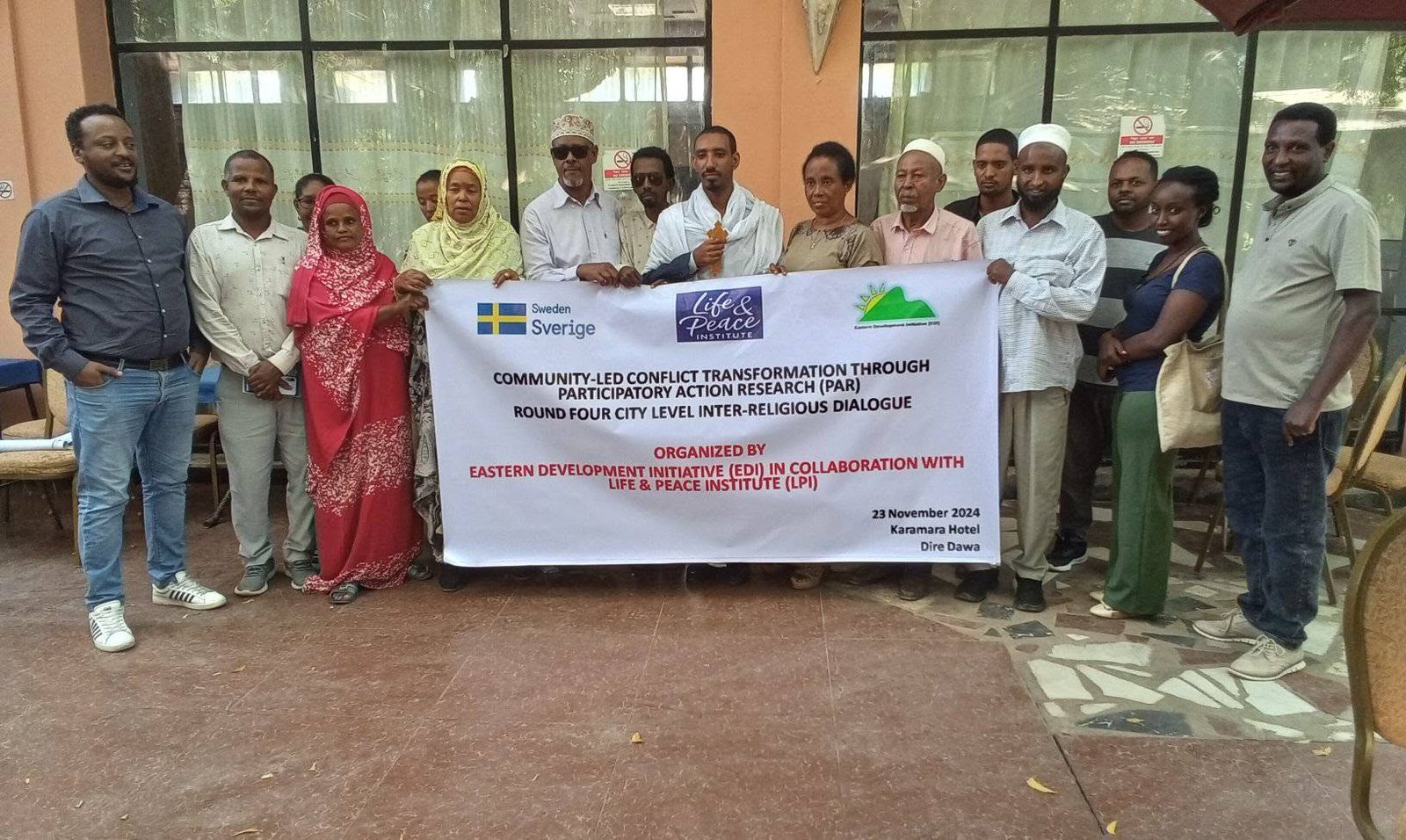
This was Round Four of the City-Level Inter-Religious Dialogue, organized by Eastern Development Initiative (EDI) in collaboration with the Life & Peace Institute (LPI), held November 23, 2024 at the Karamara Hotel in Dire Dawa, with support from SIDA.
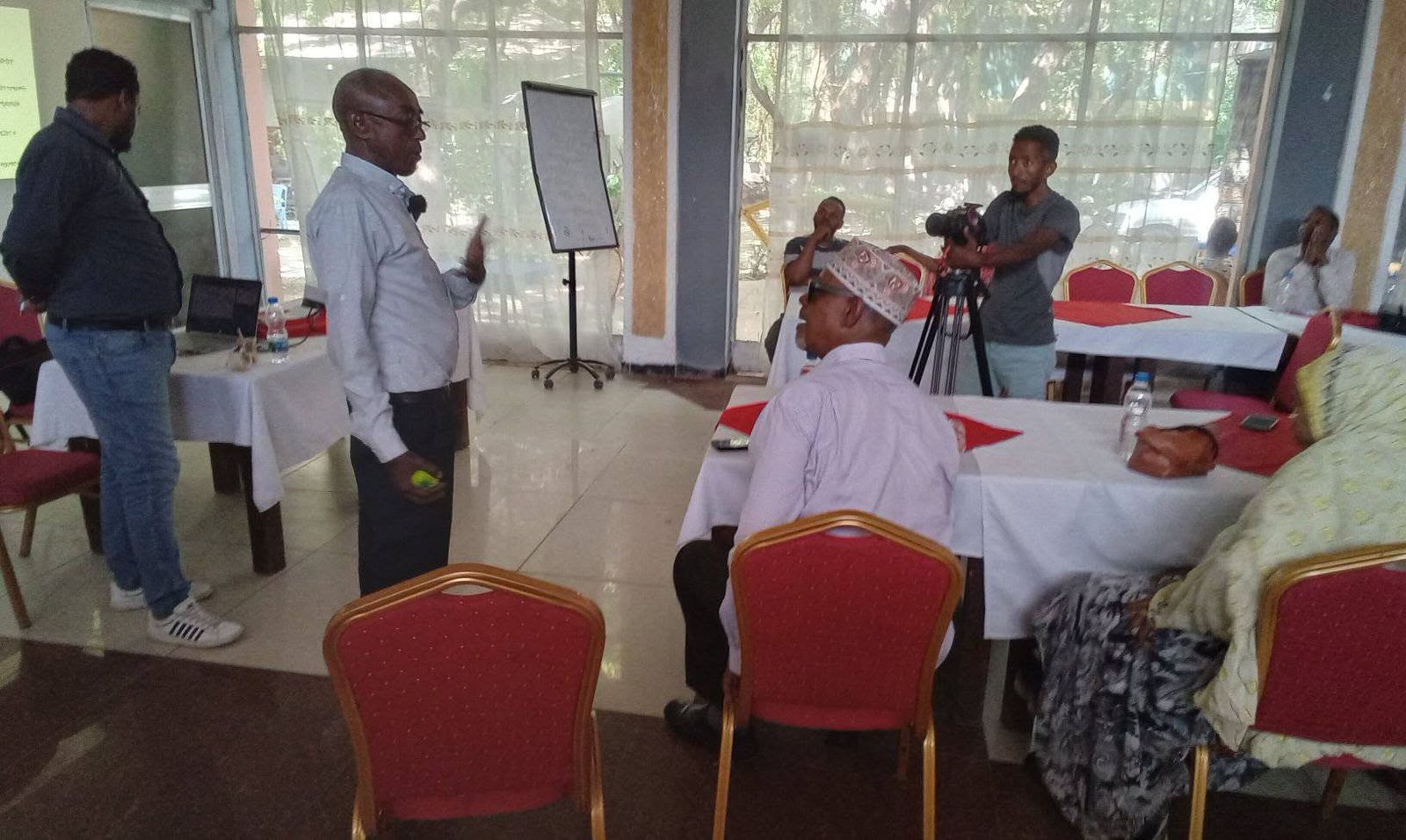
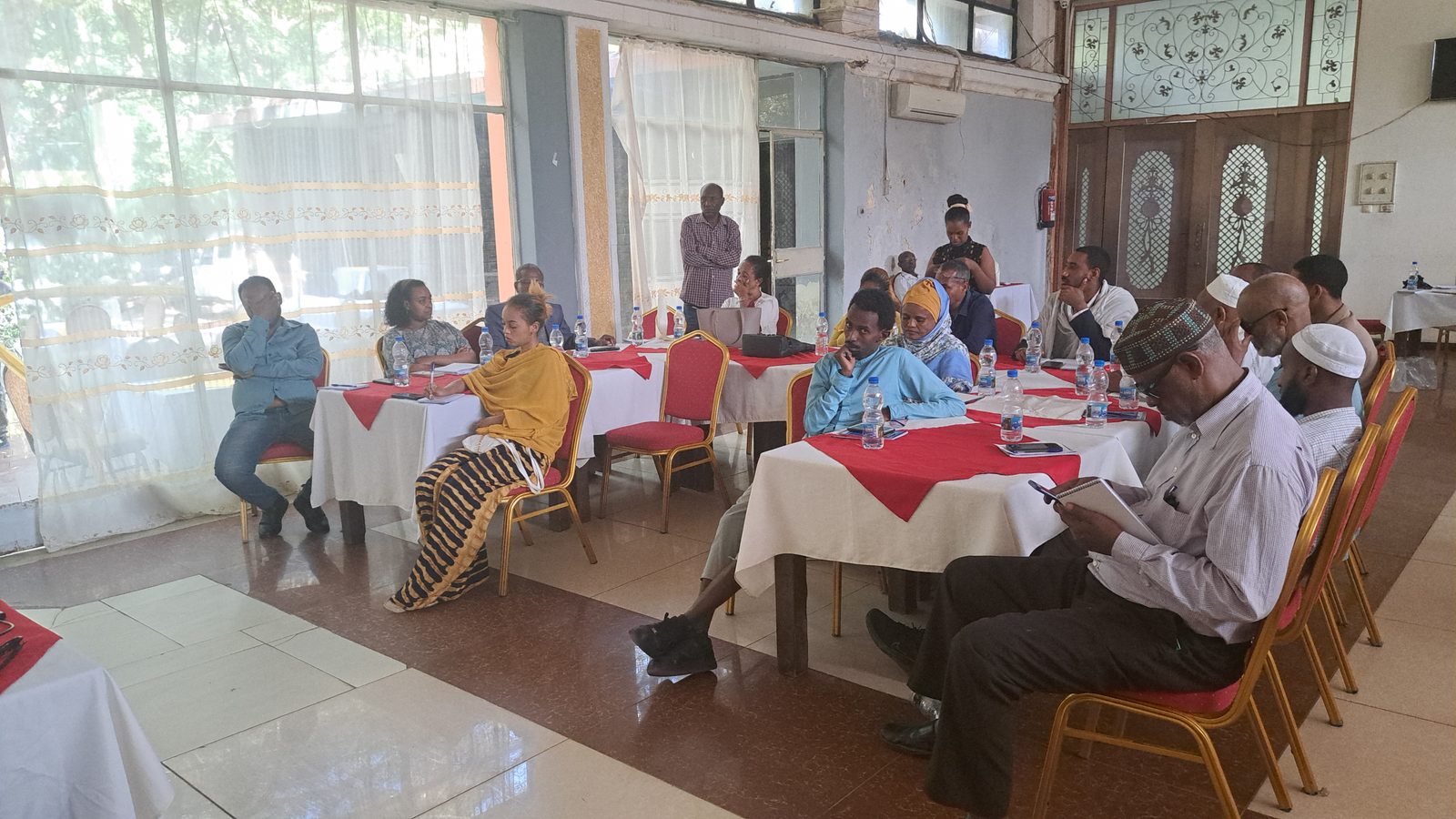
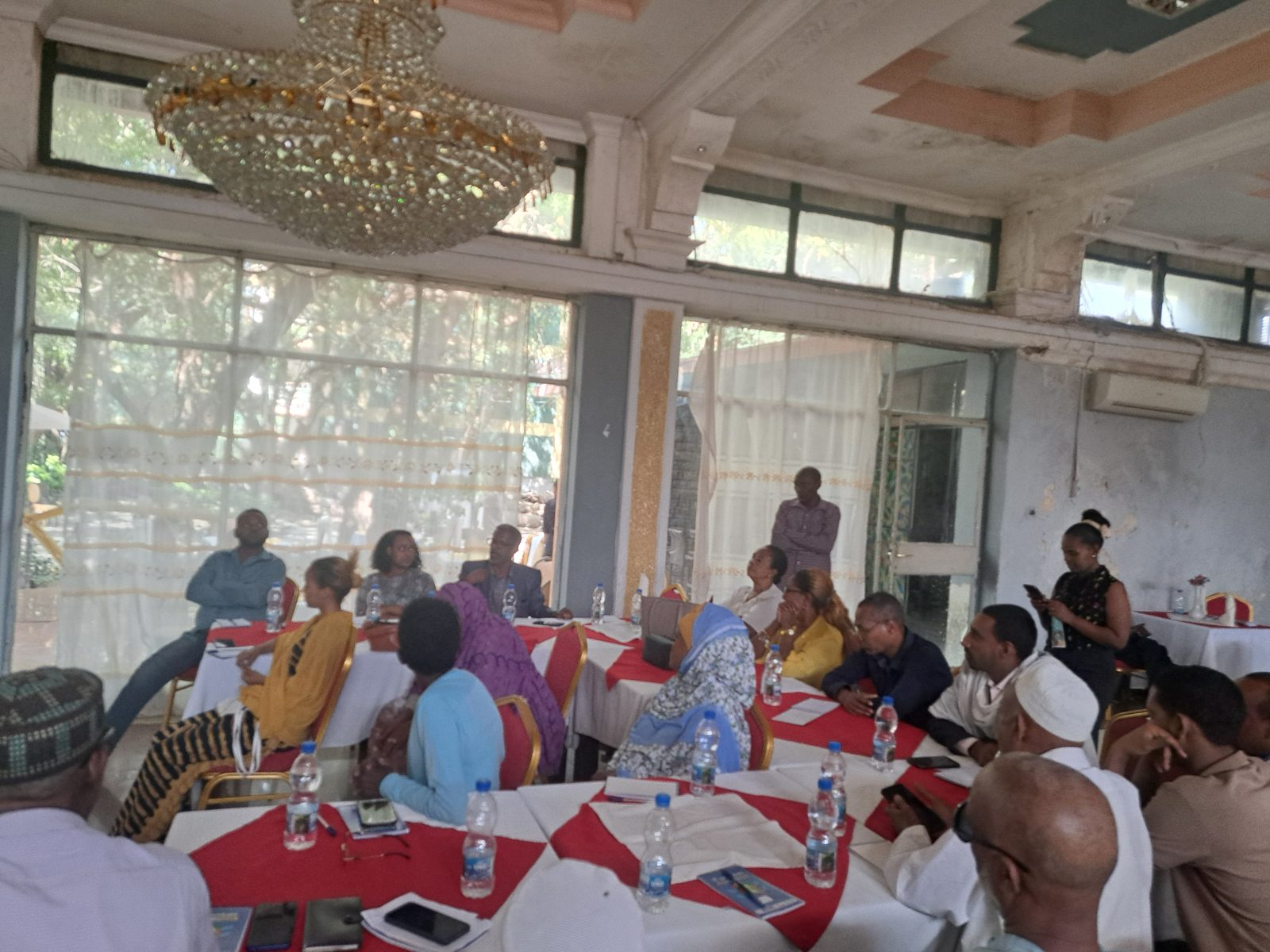
Religious leaders in kufi caps, white shawls, and formal dress sit at U-shaped tables while a facilitator works through an Amharic-language slide deck. This sat within a wider series of Karamara Hotel meetings that brought together 25 representatives (18 men and 7 women) from Orthodox, Protestant, Catholic, and Islamic communities alongside government office delegates, discussing interfaith harmony, mutual respect, and proposals for future peace conferences and reconciliation initiatives.
Round Five: City-Level Inter-Religious Dialogue
Four days later, Round Five of the City-Level Inter-Religious Dialogue took place on November 27, 2024: same venue, same partnership, a genuine back-to-back sequence rather than a one-off.
A separate folder in the archive, catalogued as "Round 3," shows the same five people at a different, earlier event, but that event's own material describes peace-committee training, not an interreligious round, so it isn't presented as part of this numbered sequence. A "Second Round" session, dated November 16, 2024, also surfaced in the archive with no dedicated folder of its own: evidence this dialogue series ran earlier rounds not fully documented here. The whole series reaffirmed Somali-Oromo harmony and reduced inter-religious tension in Goro, with religious leaders proposing continued peace conferences and closer work with peace committees, consistent with, though not directly tied to, this specific round.
Mapping the Conflict, Before the Dialogue Begins
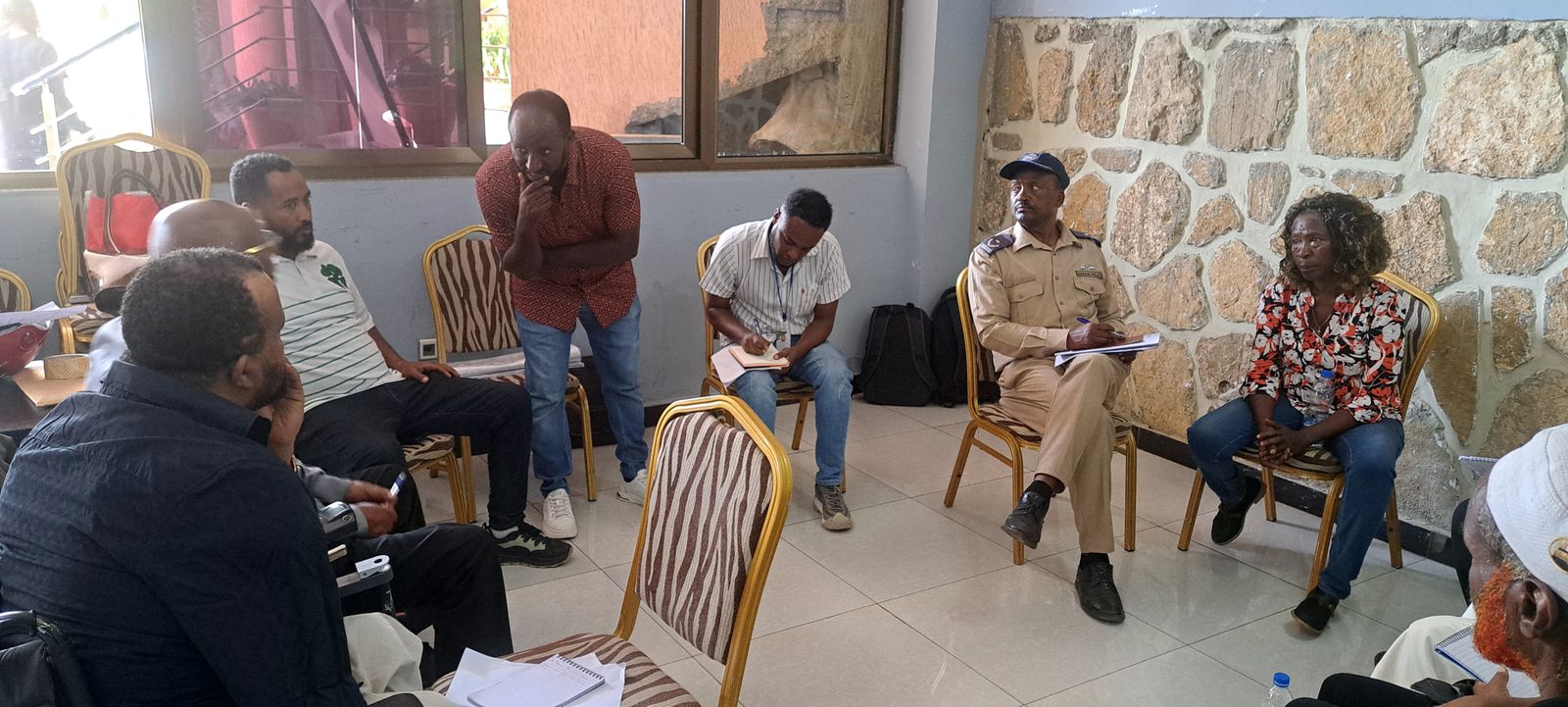
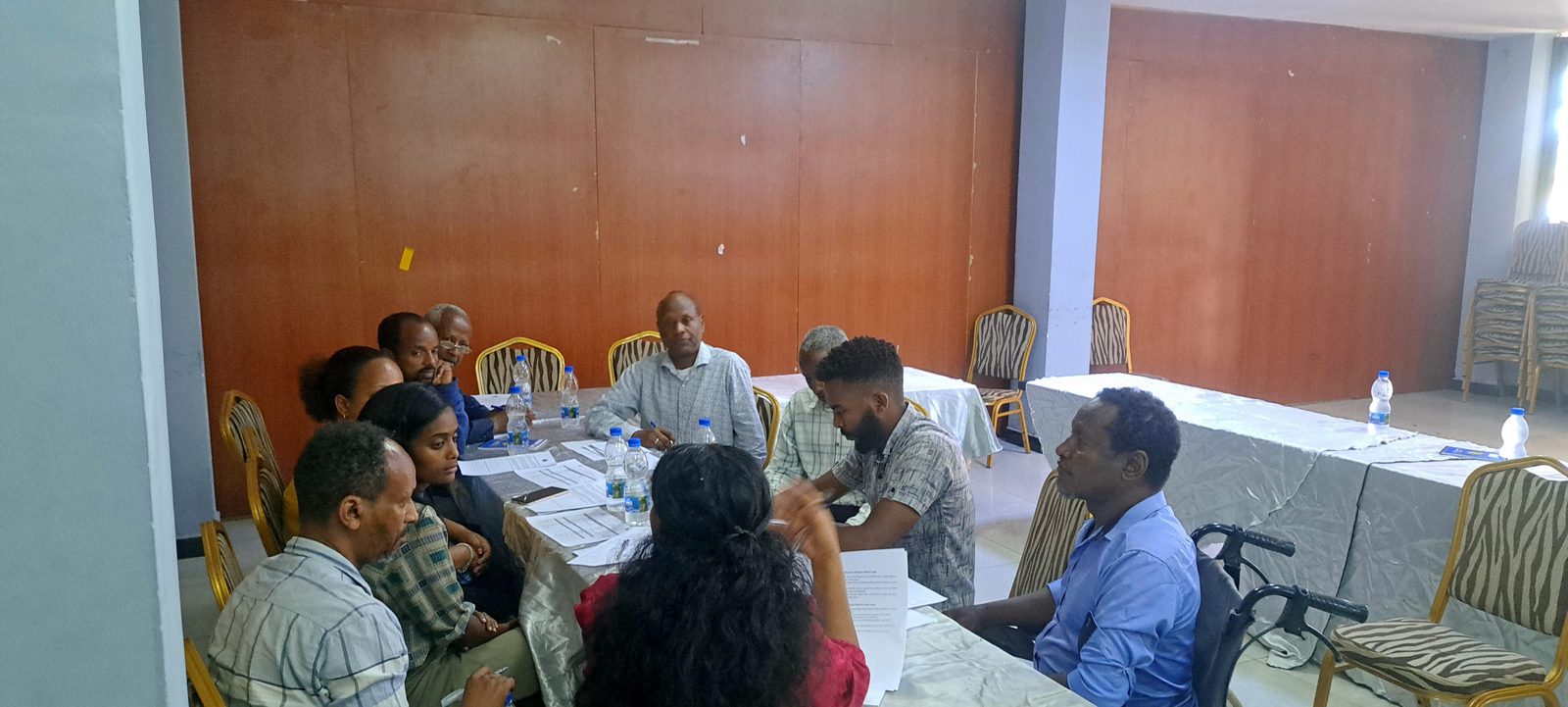
Before the woreda-level circles opened in Harar, an indoor conflict-analysis workshop brought together civilians, an elder, and a uniformed police officer around breakout tables with papers and laptops: institutional groundwork rather than a community circle. A conflict-analysis workshop in Harar was among the project's preparatory activities, run alongside the facilitator training and ahead of the six-round dialogue rollout, consistent with what this workshop is doing here, though exactly who attended beyond what's shown isn't confirmed.
The Community Dialogue Circle
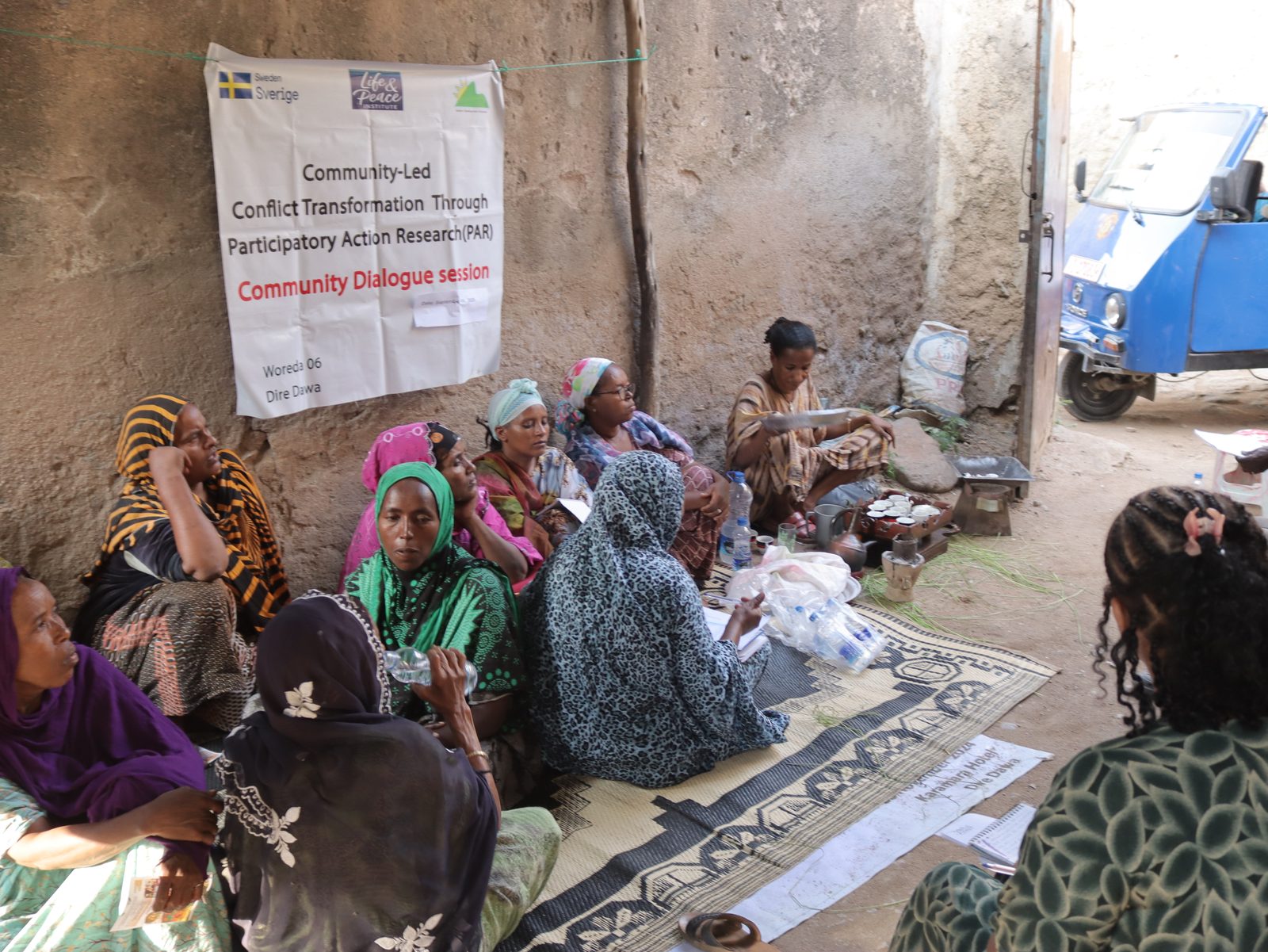
This was a Community Dialogue session under the program, held in Woreda 06, Dire Dawa, on October 1, 2025. The source folder for these photos is itself labeled "Woreda 05"; the session itself was Woreda 06, and that's what's presented here.
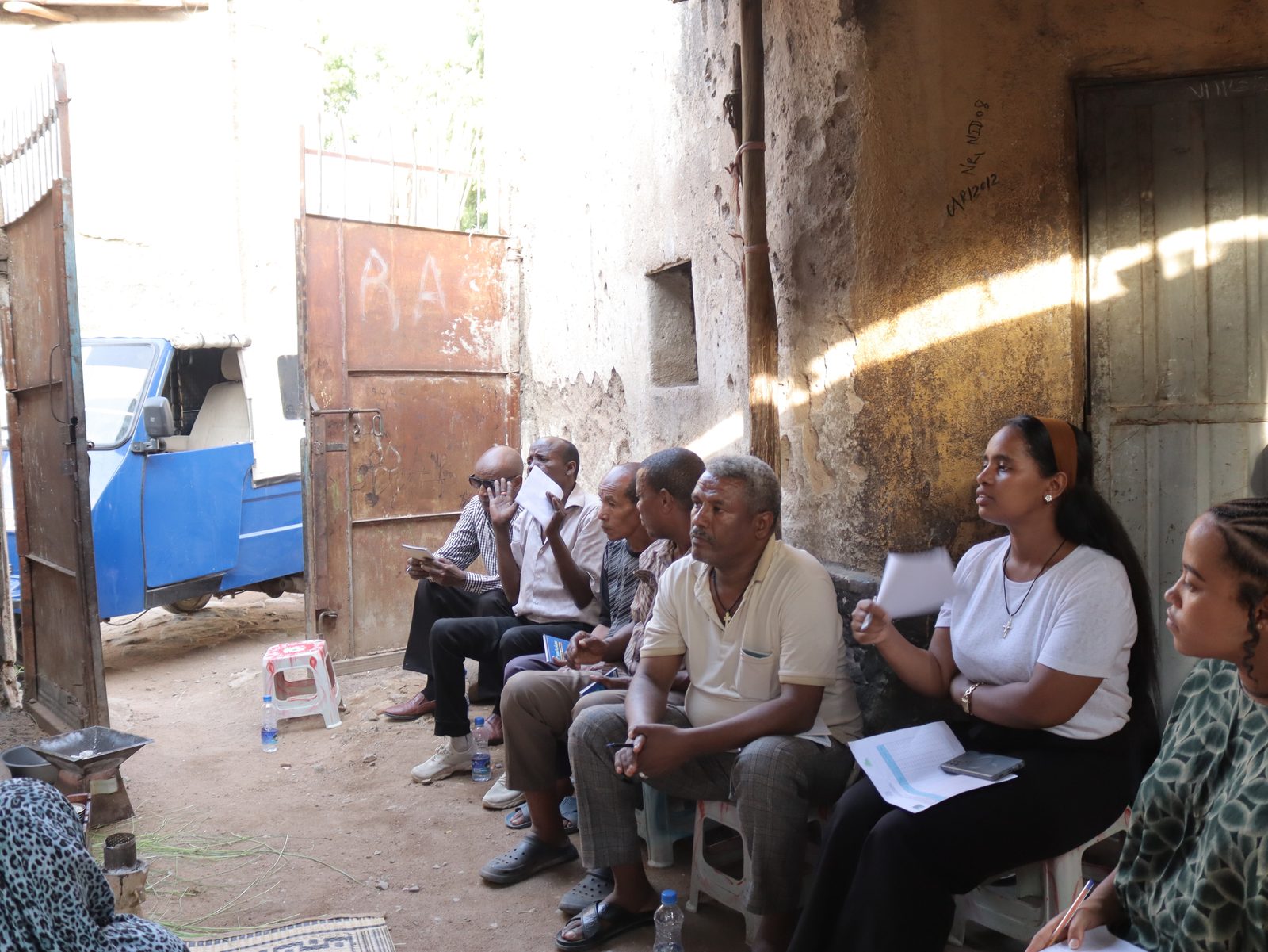
A women's group sits on a mat inside a stone-walled courtyard with coffee laid out; a separate men's group meets in a nearby alley: the program's two-track structure visible in a single visit. Every site ran exactly two such groups, Youth and Women, and Elders and Religious Leaders, of 20 participants each, meeting for six rounds between late June and September 2025: Session 1 for trust-building, Sessions 2-3 to identify issues and root causes, Session 4 to map stakeholders, Session 5 to prioritize, and Session 6 to develop peace actions.
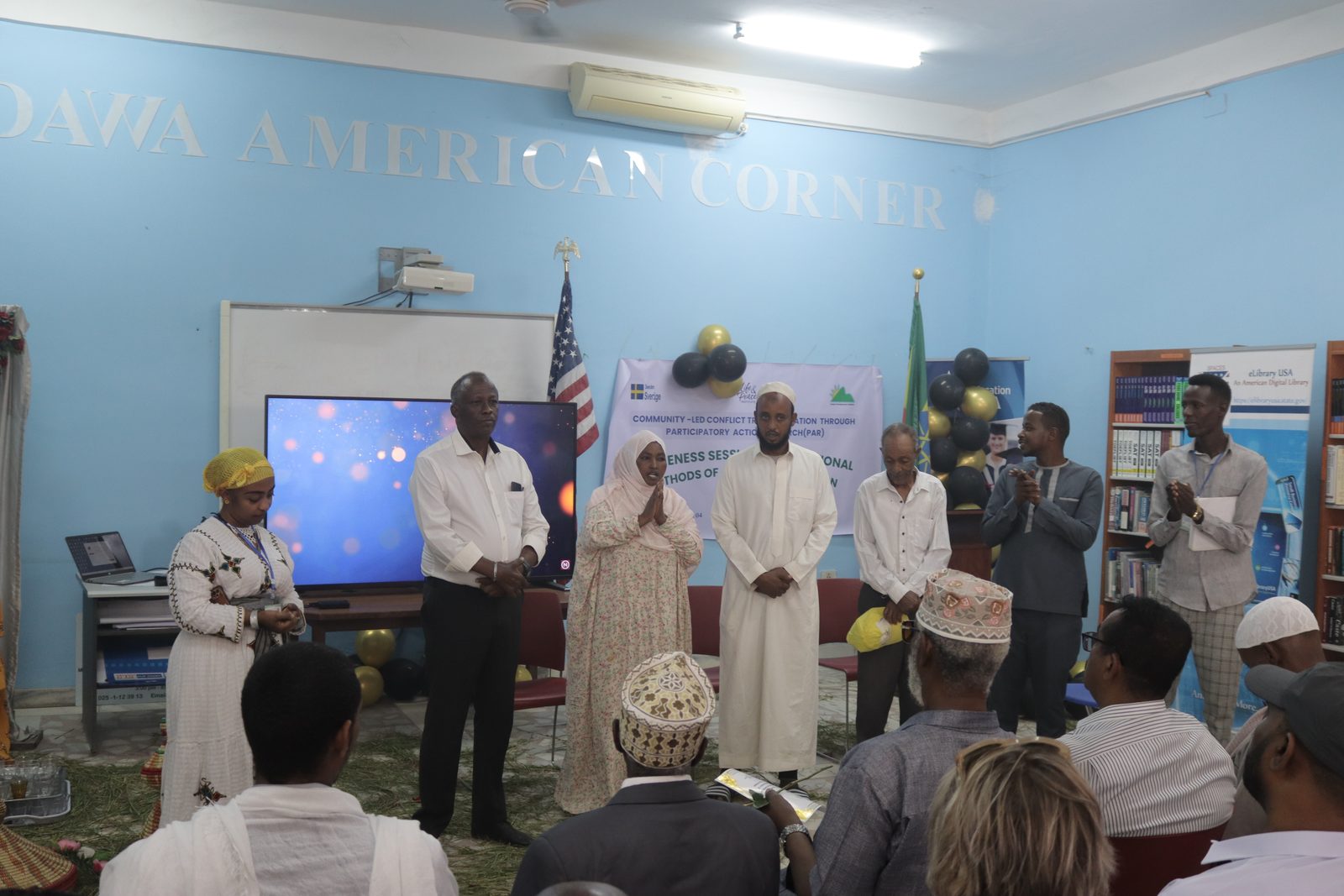
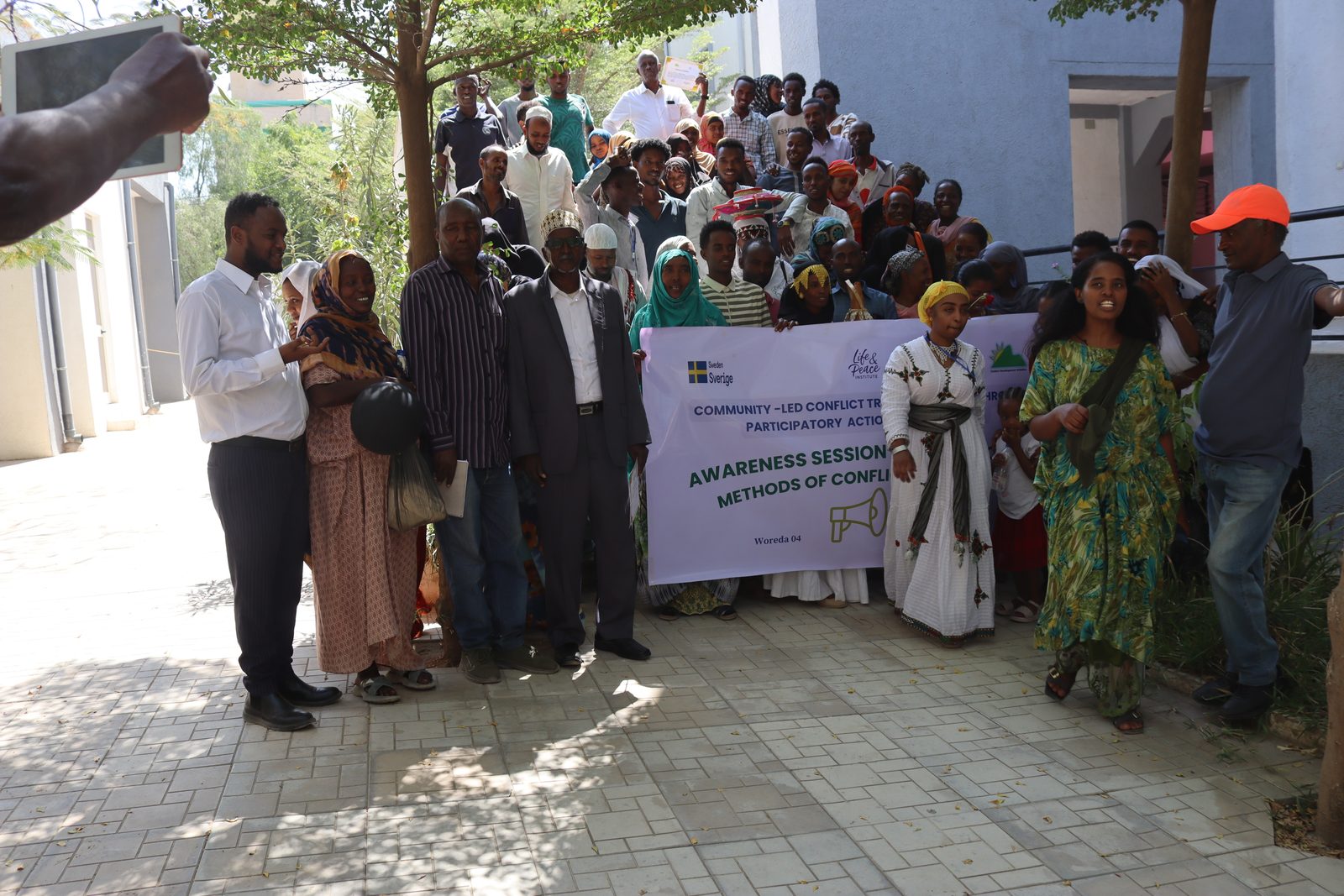
Awareness Session at the American Corner
This session, under the program, was an Awareness Session on Methods of Conflict Resolution in Woreda 04. The source folder is named "Peace Action," but the session itself was framed as an awareness session, and that's what's presented here. This matches a Woreda 04 (Sositkilo and Gendekore) peace action, the "Awareness Creation Workshop on Traditional Conflict Resolution Methods (Mediation)," held November 24, 2025 for 60 participants, aimed at increasing understanding of traditional mediation practices and promoting local wisdom and peaceful dialogue in resolving disputes.
Held indoors at the Dire Dawa American Corner, under its own wall signage, with two panelists addressing a seated audience.
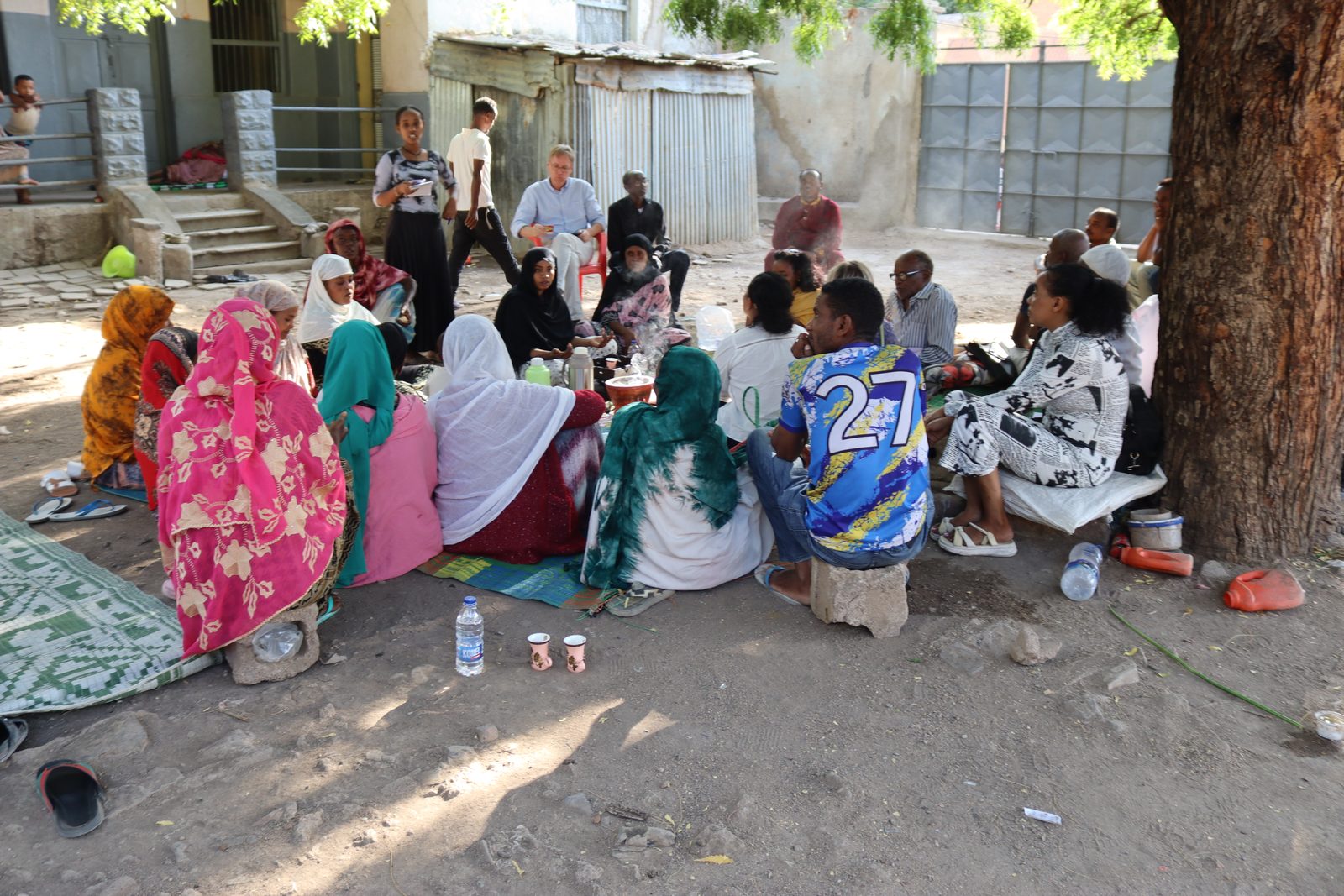
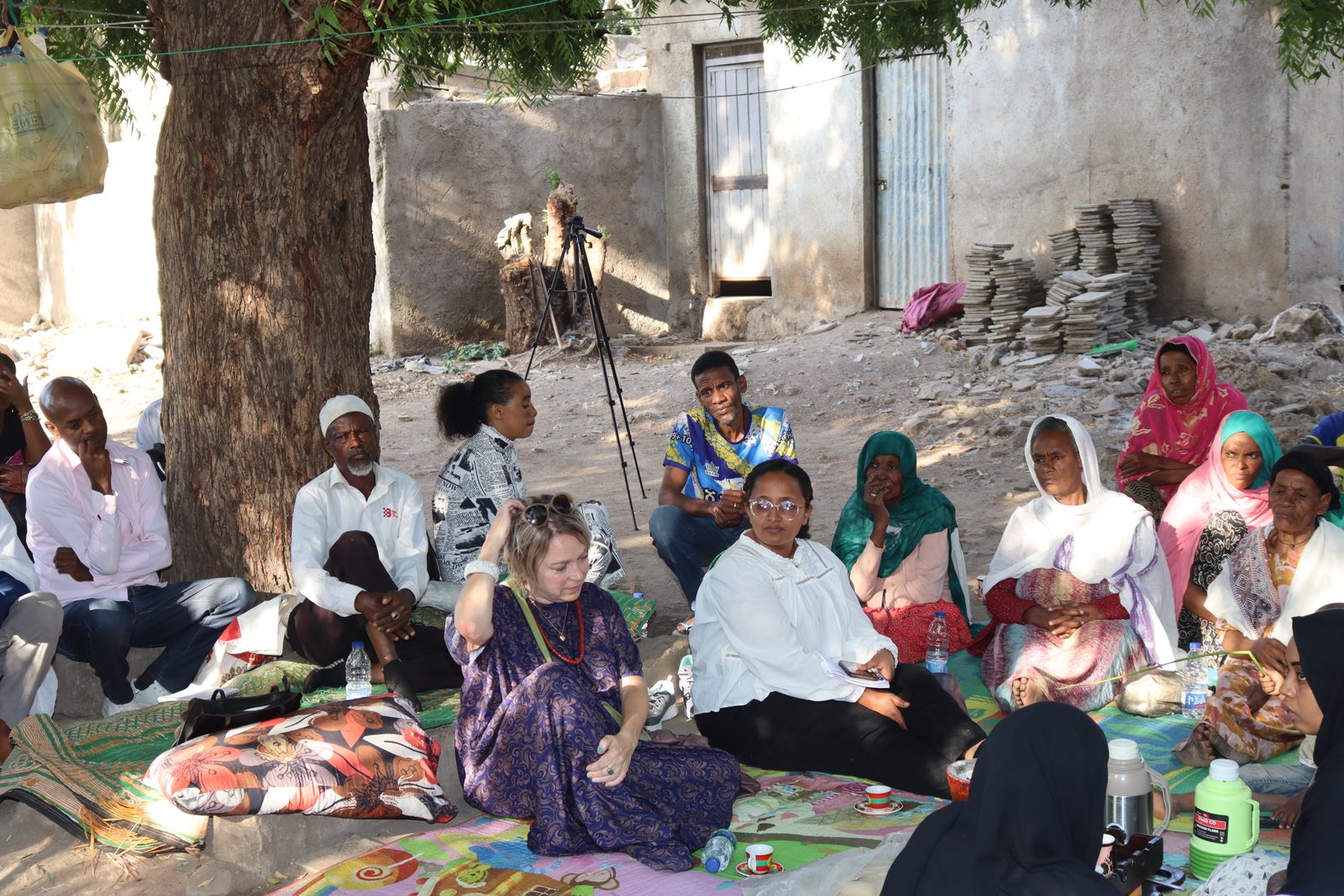
The Technical Partner in the Field
Two apparent foreign visitors sit directly inside the dialogue circle among community participants; the folder's own name identifies them as a Life & Peace Institute site visit. Nothing here independently confirms that affiliation; presented as what the archive labels it, not as a confirmed fact.
A Reconciliation Ceremony
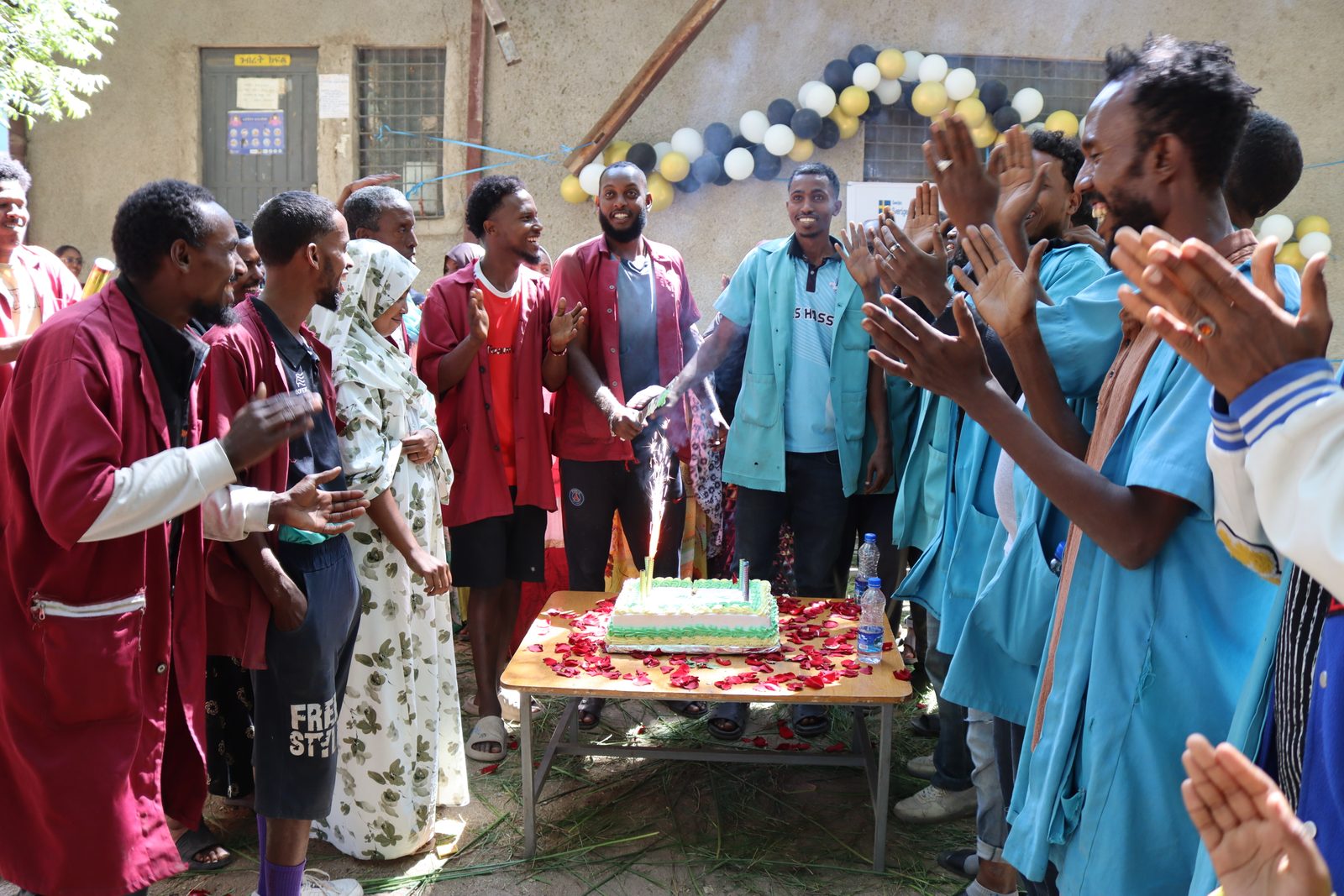
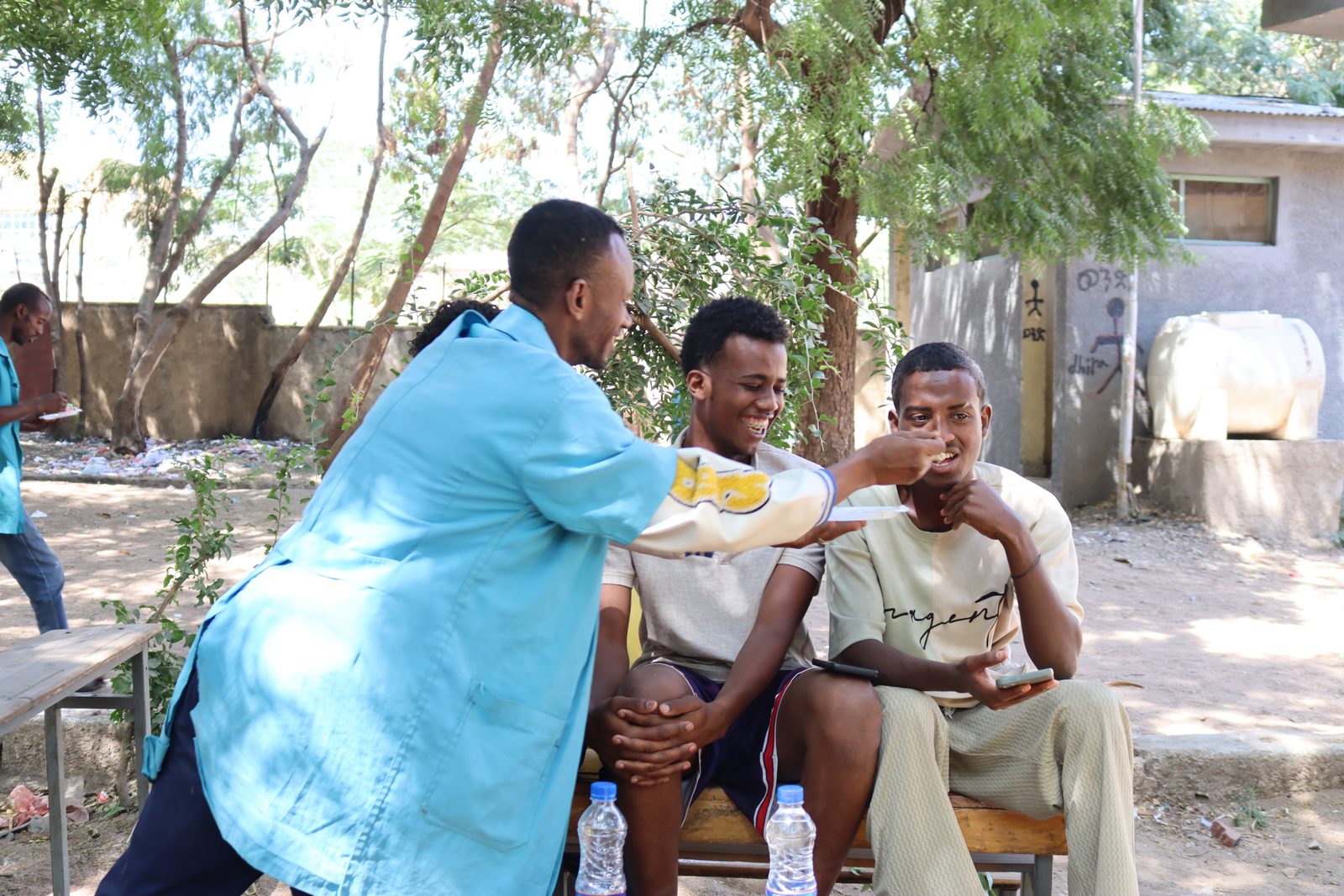
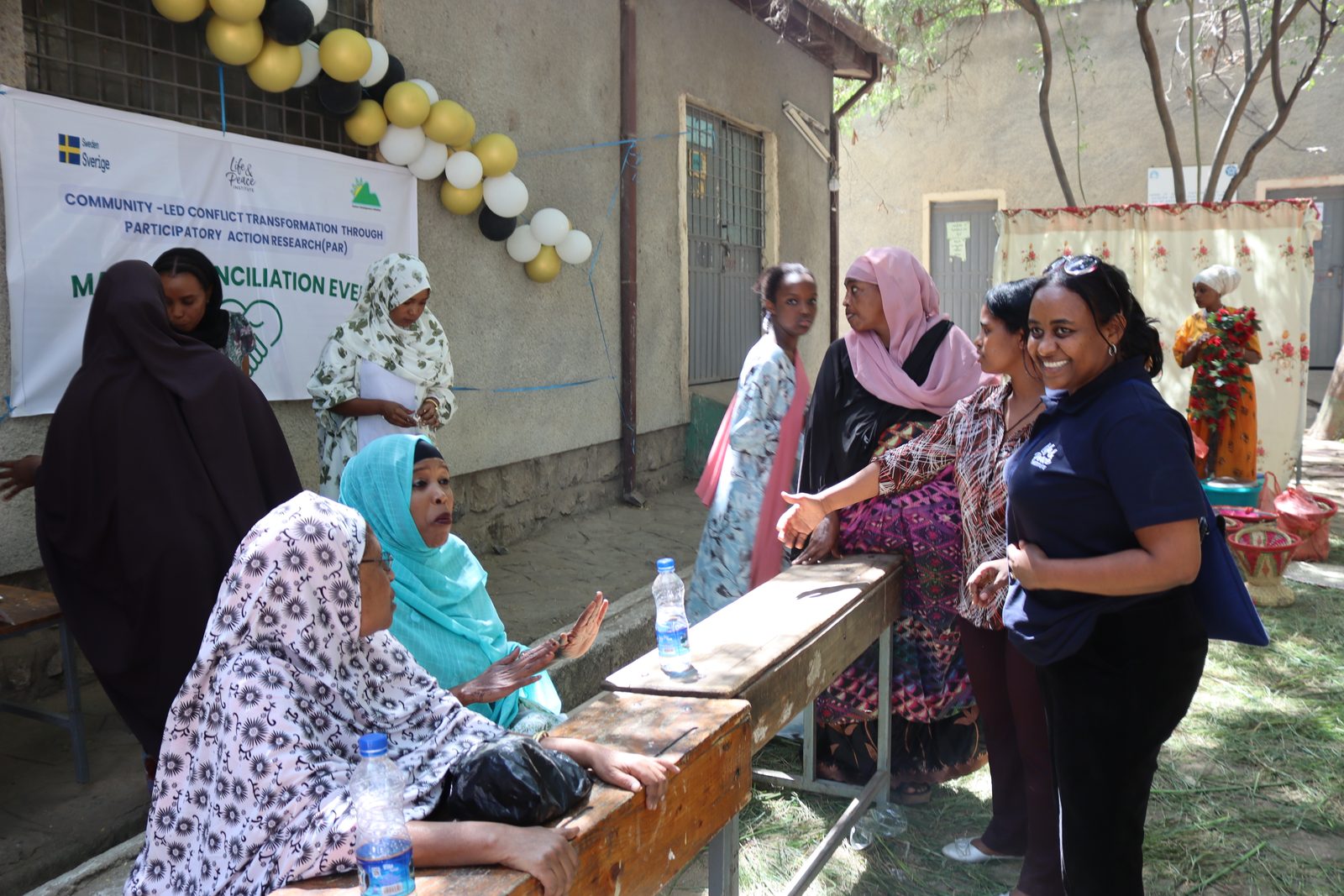
This was a reconciliation event under the program, supported by SIDA and LPI. Two groups in coordinated colors, teal and maroon, cut a cake together and feed each other food, a reconciliation gesture, in an outdoor school compound.
The specific underlying conflict isn't named in what's presented here, but this matches a Woreda 07 (Taiwan) peace action on this date: a mass reconciliation between two rival parking associations at Taiwan Market, drawing 80 participants, aimed at restoring peaceful coexistence and cooperation between the two groups, the two color-coded sides in these photos.
Vests and Committees
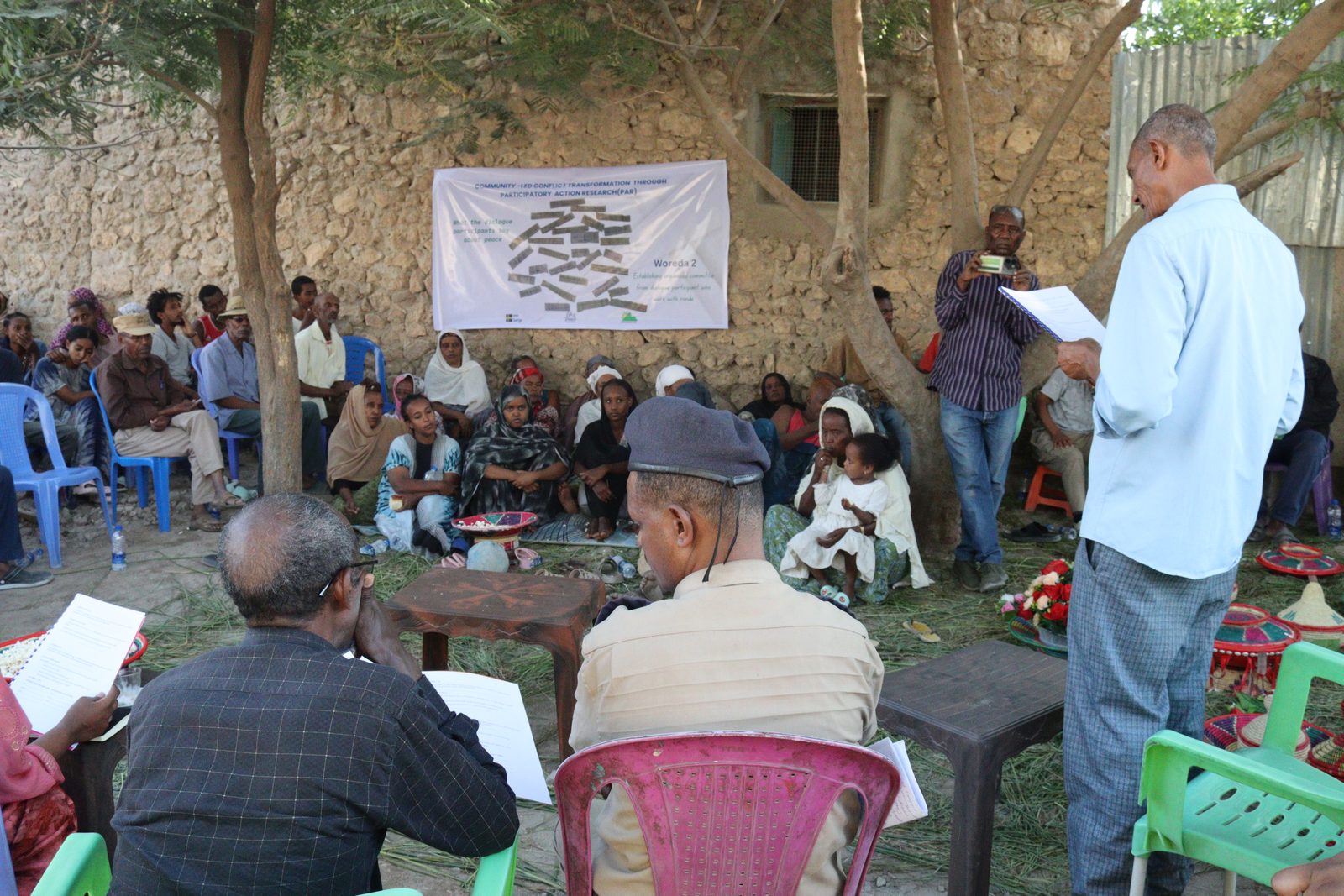
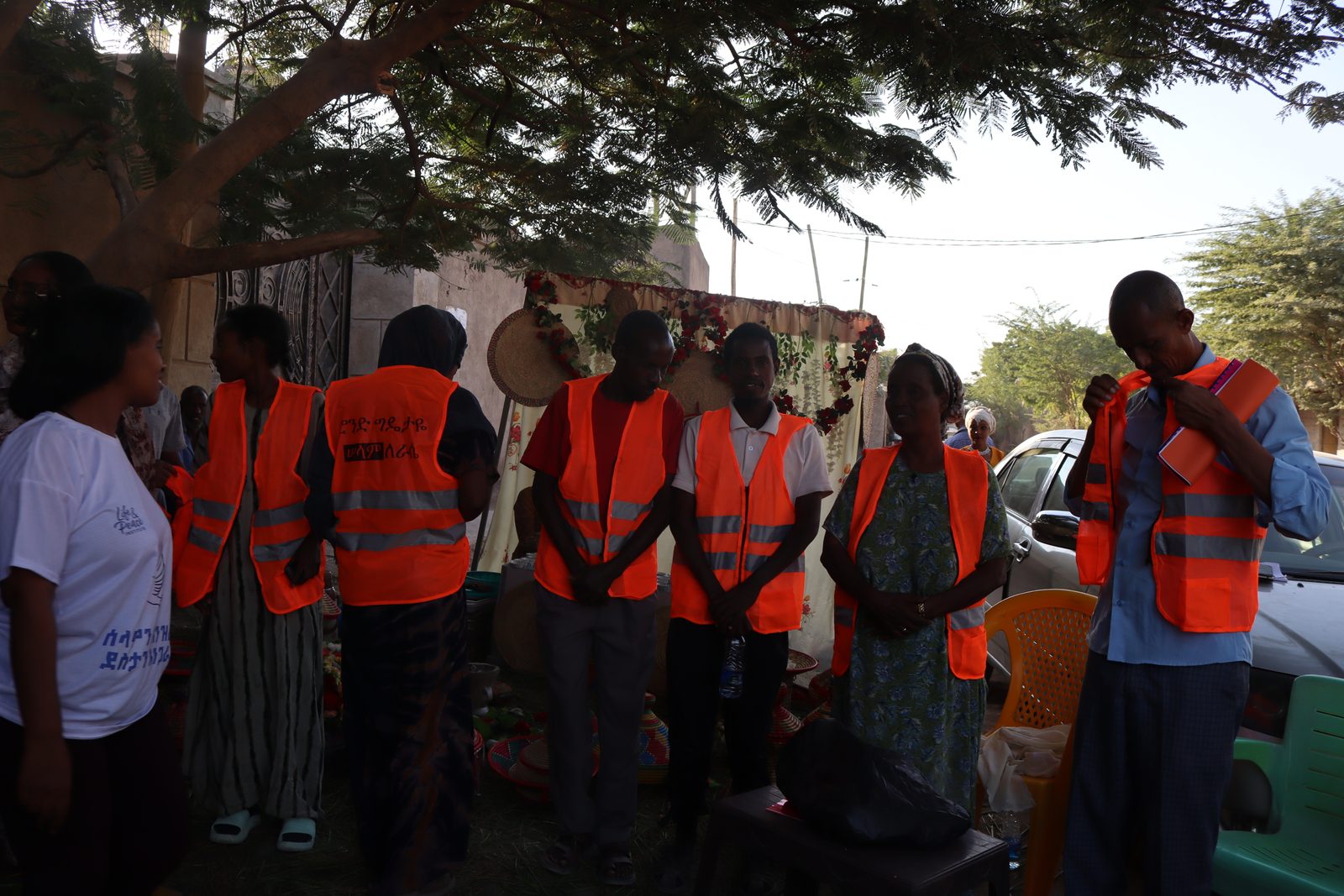
This session's stated theme, under the program, was "What the dialogue participants say about peace" in Woreda 2. What participants actually said isn't recorded here: a real gap, not a source of quotes.
What the photos do confirm is a concrete follow-through: orange reflective vests, handed out to participants in a walled courtyard, turning dialogue into an identifiable community role. This matches a Woreda 02A (Dawit Garaz and Murtu Gutu) peace action on this date: 75 dialogue participants forming an organized committee to work alongside the neighborhood's informal "Rond" watch, monitoring and reporting suspicious activity.
The Dialogue Reaches Harar
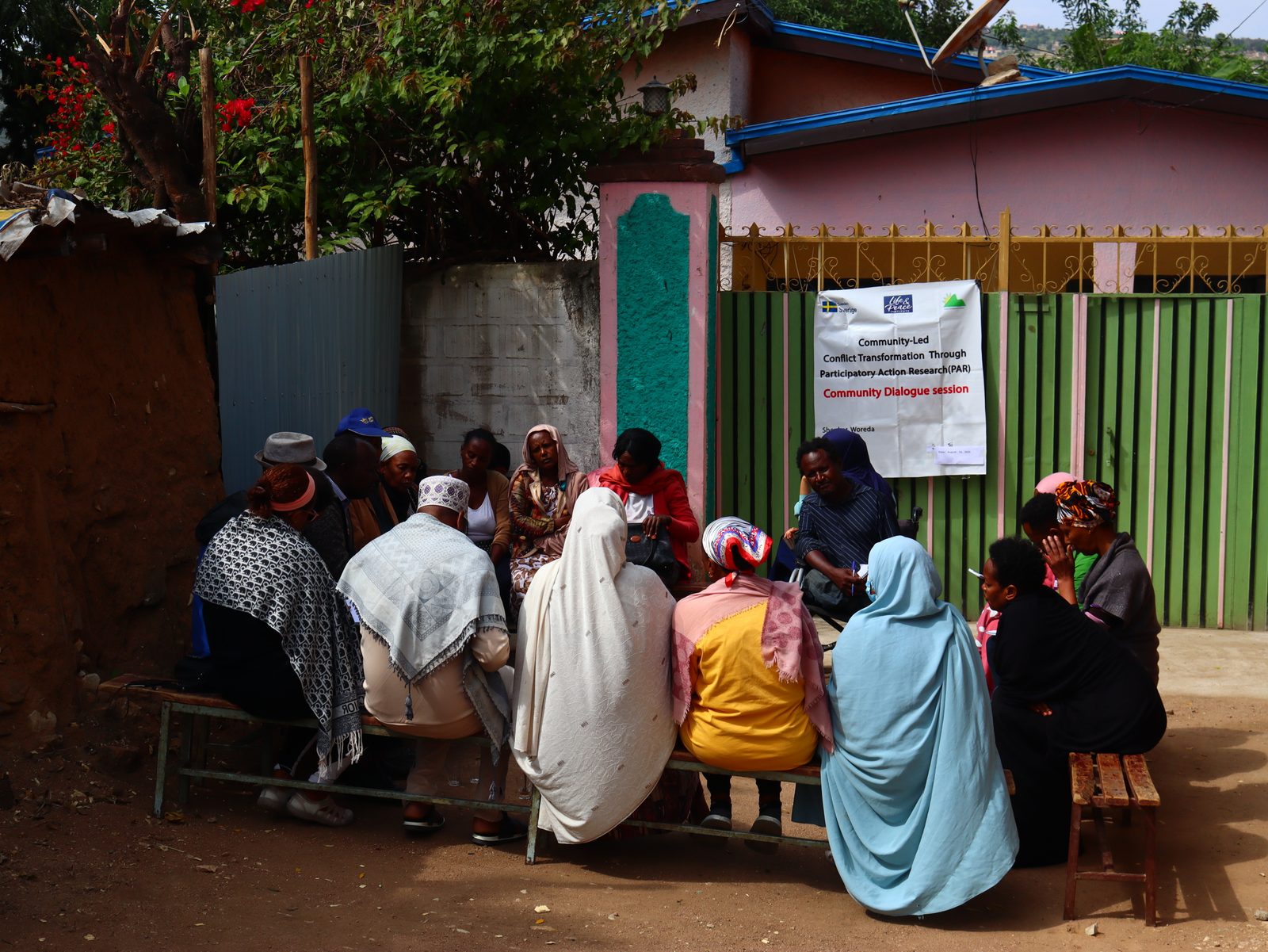
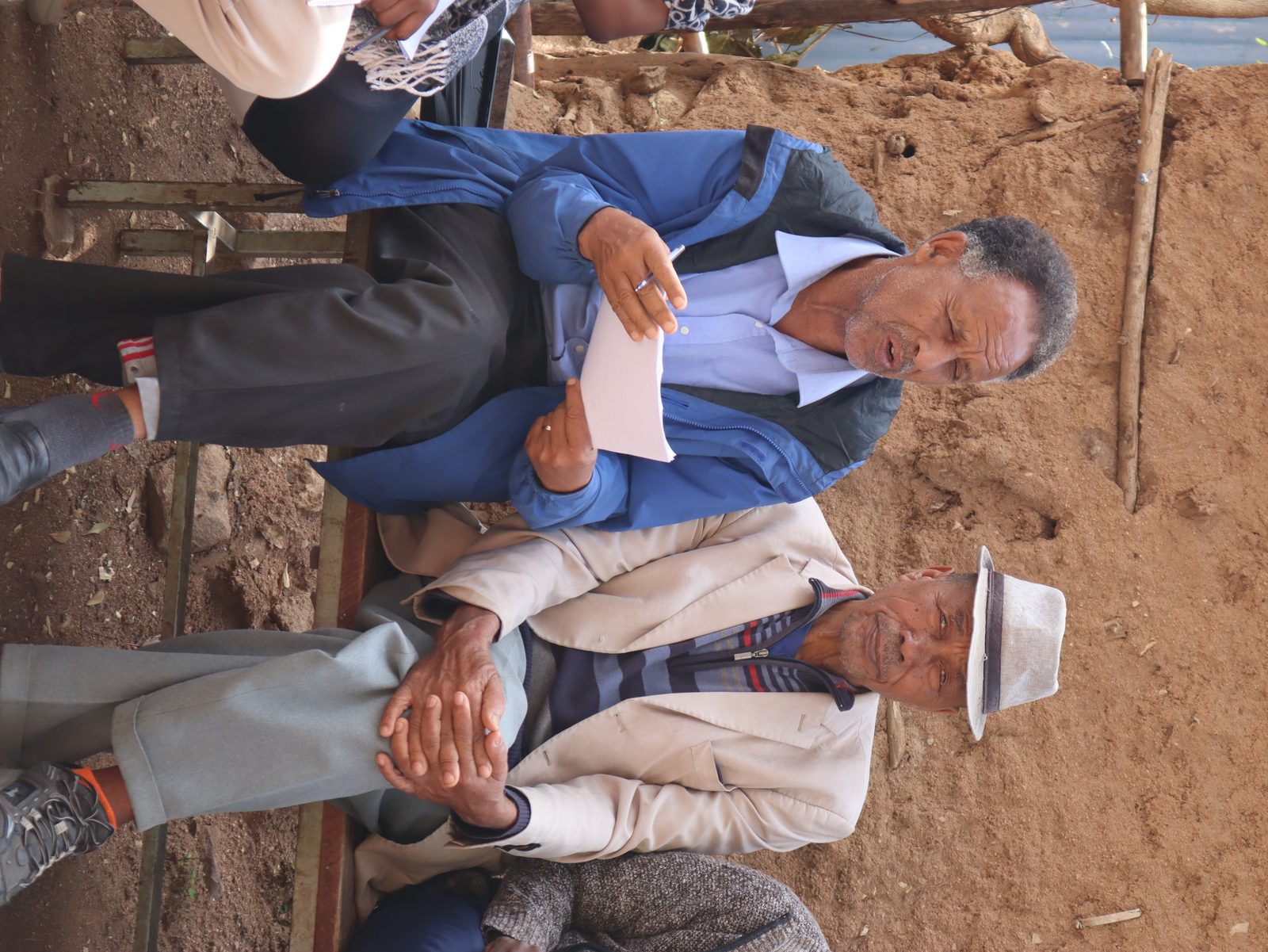
This was a Community Dialogue session under the program in Sheshes Woreda, Harar: same format, same partnership, now on outdoor benches in front of a painted gate, a plainer room than the Dire Dawa hotel ballroom where Chapter I opened this story. Only two Harar woredas, Aboker and Shenkor, are otherwise named as the project's Harar dialogue sites; Sheshes isn't among them, so this session's place in the program's official site list is a gap, not a contradiction to resolve here.
Planting Peace, Walking Together
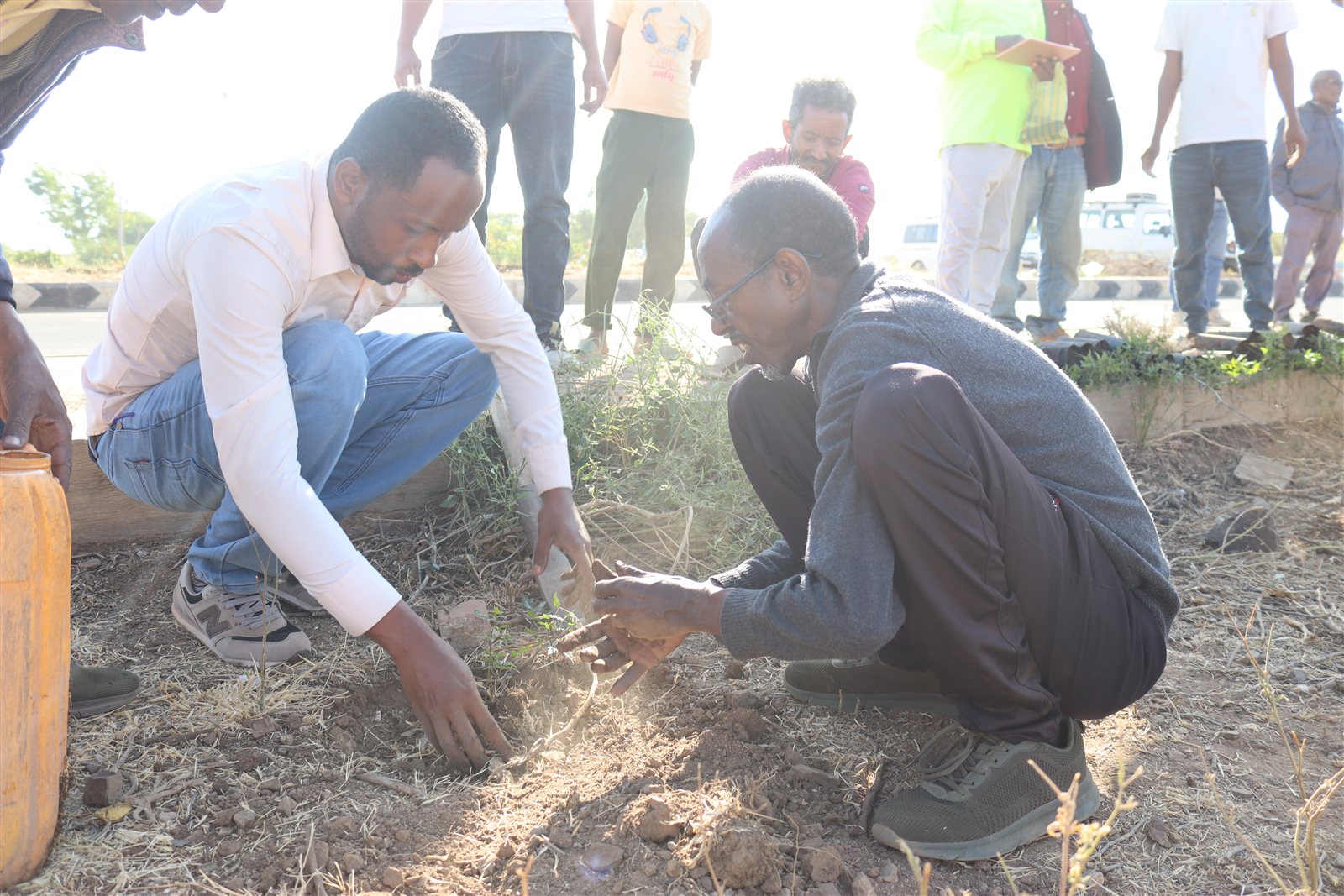
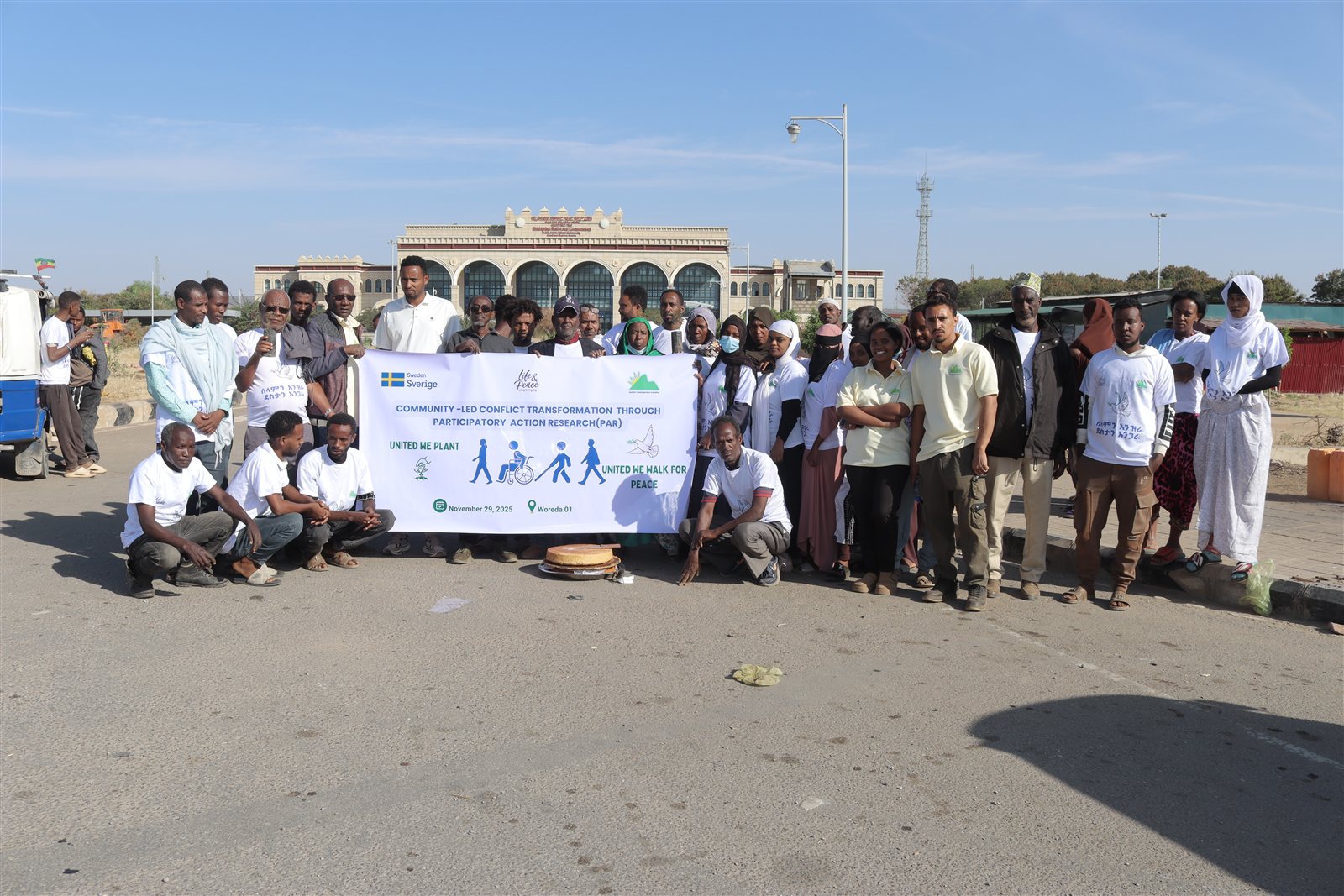
This was a peace action under the program, "United We Plant" and "United We Walk for Peace," held November 29, 2025 in Woreda 01, Dire Dawa, near the city's old railway station. Wheelchair and cane icons built into the event's own design make the accessibility message explicit, not incidental.
Participants dug and watered saplings by the roadside before gathering for a group photo, roughly thirty people in matching white peace-dove T-shirts, mixed in age, with at least one older participant using a cane. A cake set on the ground nearby suggests a small closing celebration alongside the planting.
Another Reconciliation, One Week Later
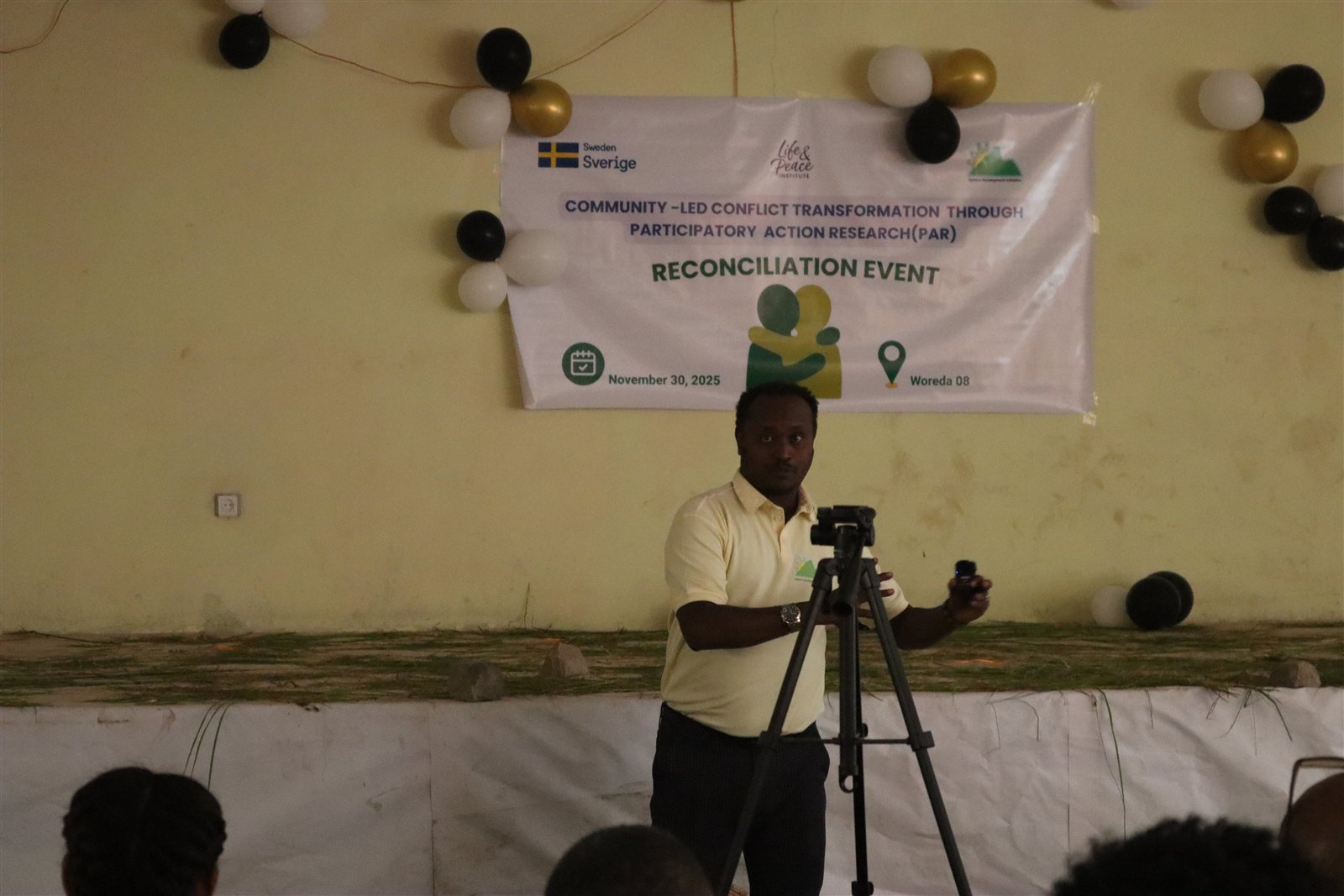
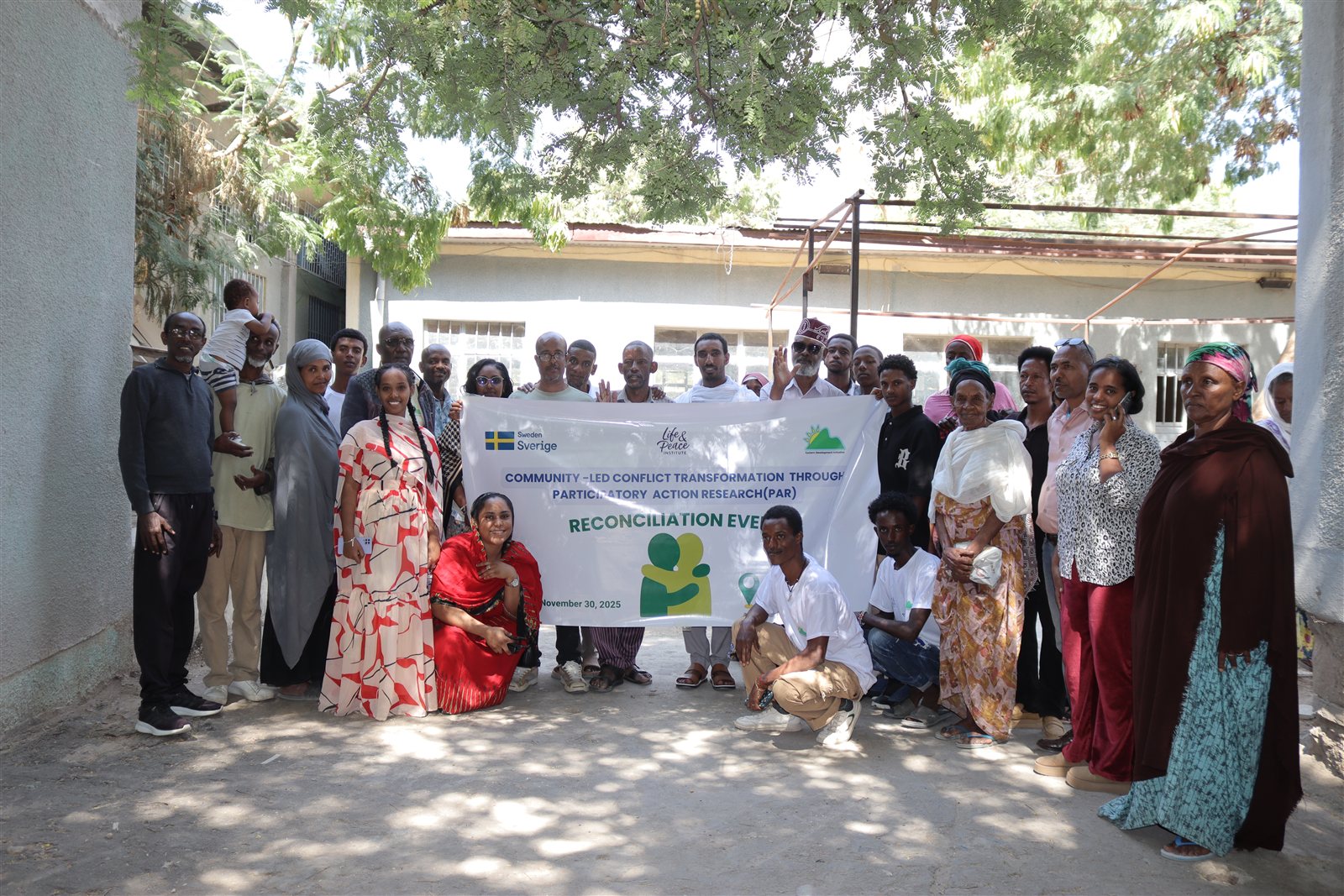
A second reconciliation event under the program, one week after Chapter VII's and built around the same two-figure embrace icon, took place November 30, 2025 in Woreda 08, Dire Dawa, this time indoors under strings of black, white, and gold balloons.
A uniformed Dire Dawa police officer sits among the seated attendees, and each chair carries its own printed number, a more formal, ticketed seating arrangement than Chapter VII's outdoor school-compound setting. Young men in matching T-shirts reading "Sowing Peace Harvest Happiness" line up before a video camera on a tripod, and the session closes with an outdoor group photo mixing elders, youth, and a baby.
Taking Peace to the Market
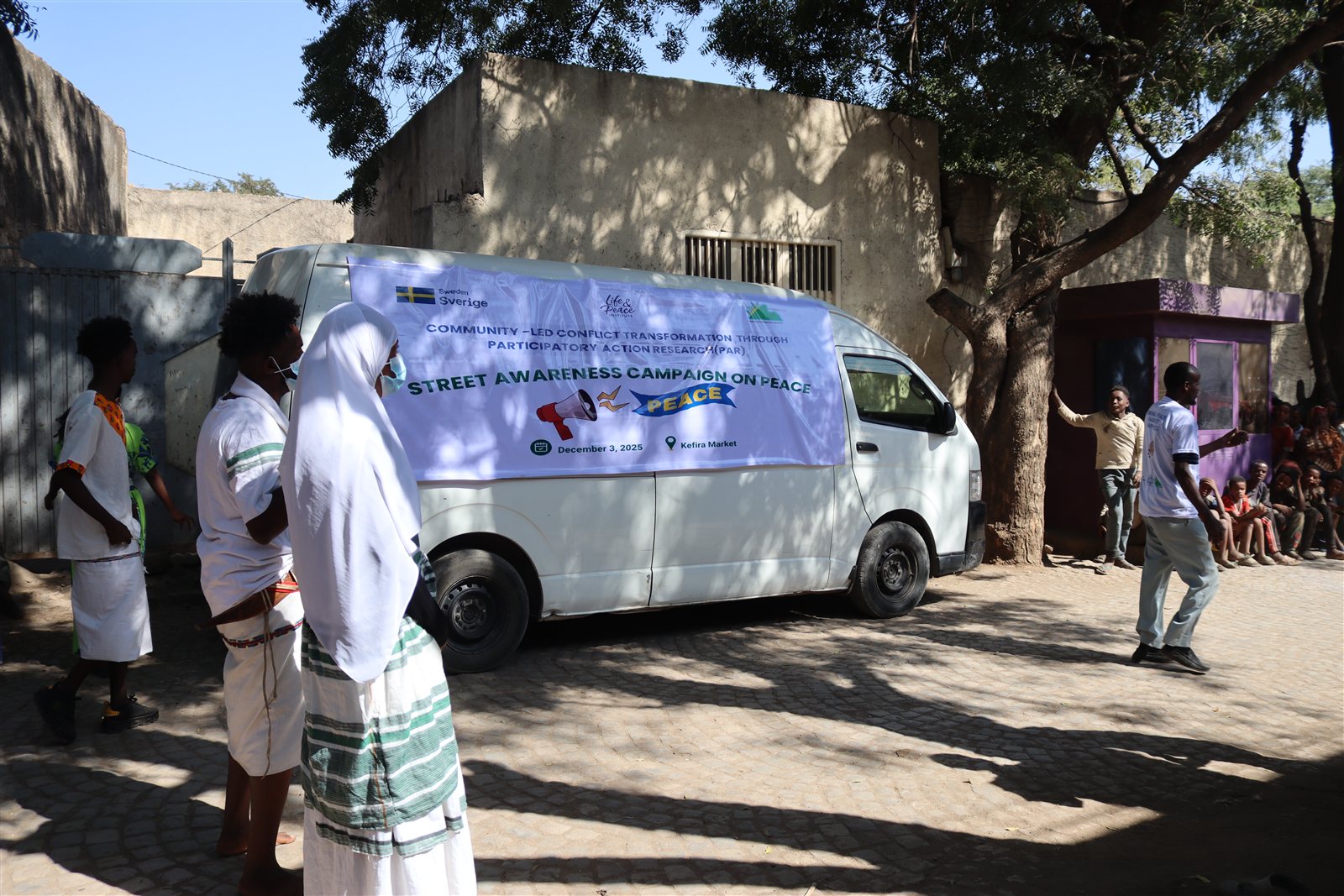
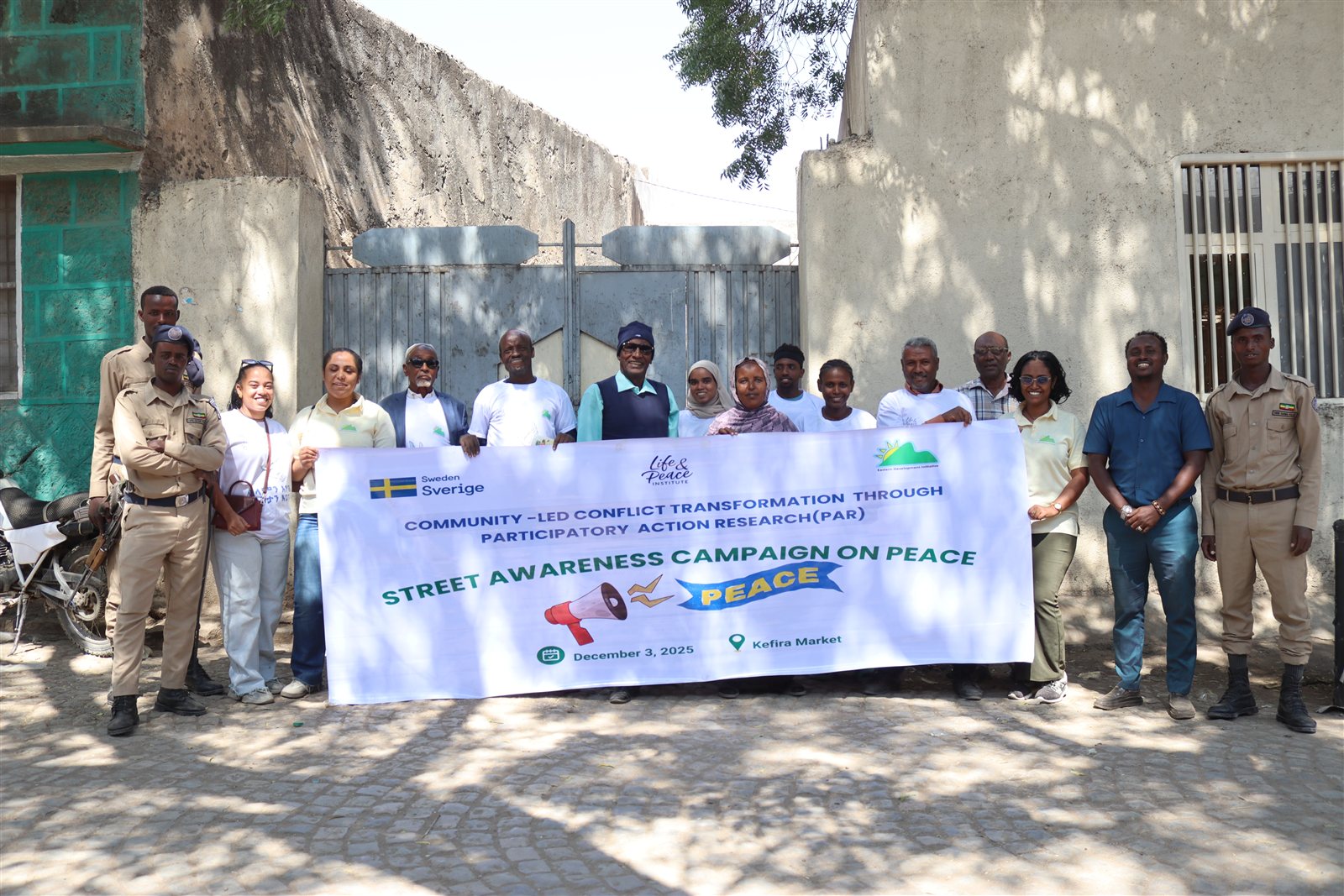
This was a public street awareness campaign under the program, held at Kefira Market in Dire Dawa on December 3, 2025, carrying the dialogue's message out of hotel halls and courtyards entirely. The source folder names this a "Woreda 06" event, but nothing legible on camera ties the campaign to a specific woreda number, so this chapter names the market, not a woreda, as the confirmed location.
A uniformed police officer and community elders stand among the crowd, and participants are seen holding printed pledge cards, a public commitment gesture rather than a closed-room discussion. A near-identical campaign at Ashewa Market the day before is not told as its own chapter here, repetitive of this one in both format and message.
Let Your Posts and Shares, Educate Not Harm
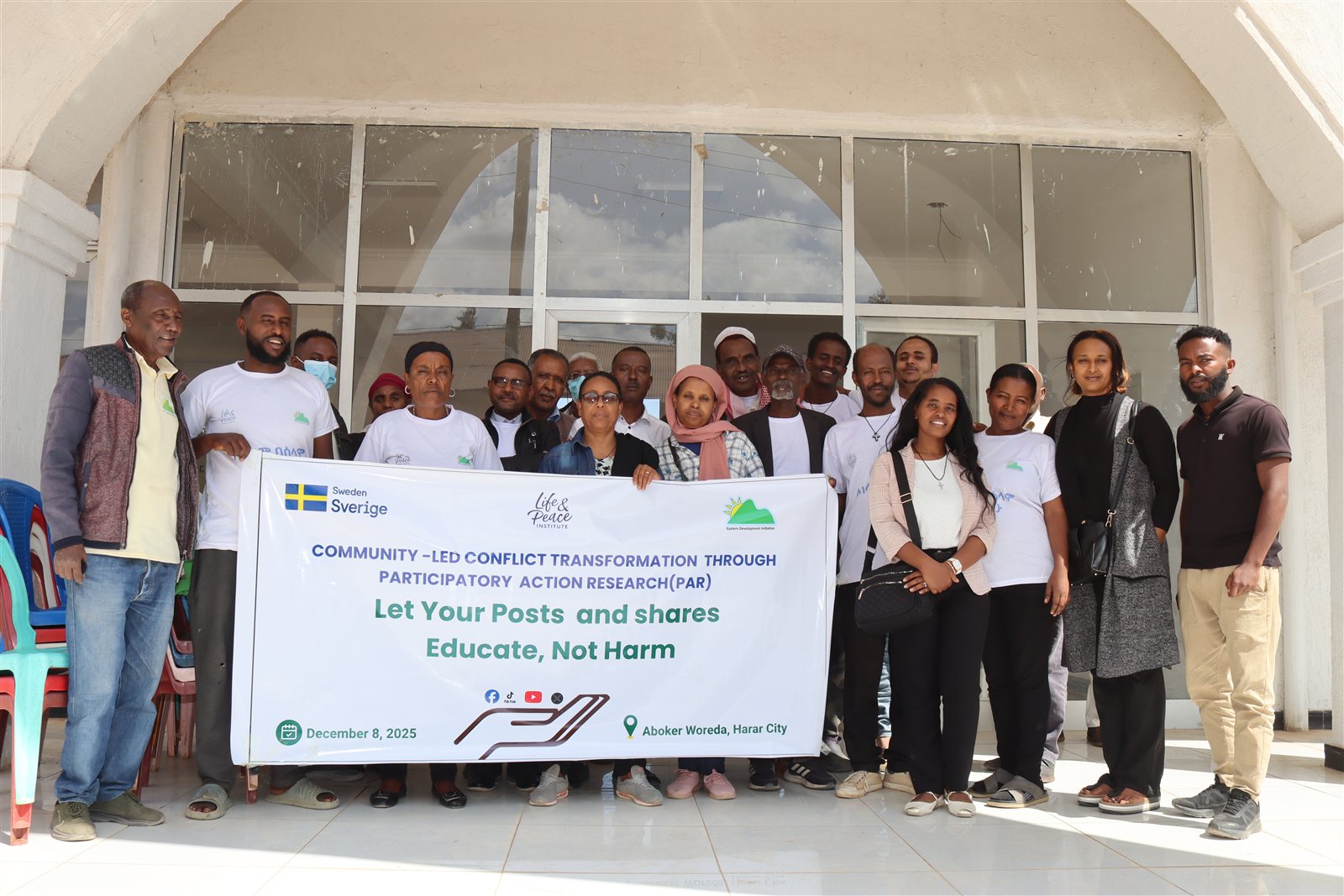
A different kind of session under the program, this one about media literacy rather than face-to-face conflict, took place December 8, 2025 in Aboker Woreda, Harar City, built around a single direct message: let your posts and shares educate, not harm. Facebook, TikTok, and YouTube icons sit alongside the program's usual branding.
This is a separate Aboker session from the community dialogue circle told elsewhere on this site under its own Harar story; that one is a dialogue session, this one a public talk on responsible social media use, held in the same neighborhood. Rows of seated attendees, many wearing "Walking for Peace" T-shirts, fill an indoor hall, and the session closes with group photos taken both indoors and under an outdoor archway.
A note on this draft
This is a sample of roughly a thousand community-dialogue photographs, not a census: at least seven additional woreda folders (a second Woreda 07 session, three separate Woreda 08 folders, Woreda 09, and a thin "Community Dialogue Round 5" folder) were reviewed and left out as visually repetitive with chapters already included, or too thin to support their own chapter. A "Woreda 05 Wrapup" folder looked like a plausible closing ceremony but had no confirming detail and was left out rather than asserted as one.
Several folder names in the source archive directly contradicted what the sessions themselves actually were: a folder called "Woreda 05" that was actually Woreda 06, a "Peace Action" folder that was actually framed as an "Awareness Session," a "Round 5" label with nothing to confirm the session was in fact a fifth round. Every such case is resolved in favor of what the session itself shows, and flagged in the chapter text above rather than silently corrected.
Chapters X–XIII added: four more peace actions surfaced later in the archive: tree planting and a peace walk in Woreda 01, a second reconciliation event in Woreda 08, a street campaign at Kefira Market, and a media-literacy session in Harar's Aboker Woreda. An earlier version of this note listed "Woreda 01" among folders reviewed and left out as repetitive; that referred to different, thinner material than the tree-planting and peace-walk session now told as Chapter X, which carries its own confirmed date, location, and closing detail. A near-identical street campaign at Ashewa Market, one day before Chapter XII's, is excluded as repetitive of it, and its own folder name's woreda number, like Chapter XII's, isn't confirmed by anything on camera.
What's missing throughout: participant names and first-person testimony, including, in Chapter VIII, the dialogue participants' own words about peace, which the session's stated theme promises but nothing here delivers. Several previously-open dates and objectives are now resolved (Chapters IV, V, VII, and VIII carry confirmed dates, participant counts, and aims), but some chapters (III, VI, IX) still rest on the photographs alone, without a close enough match to state their details as fact. Coverage spans roughly seven to eight of the program's woredas, not confirmed as the complete rollout. Add real names and direct quotes before external distribution.
EDI · Draft photo story · Not for external distribution